Advice
Wedding Guest Experience: 9 Things People Notice More Than Your Decor
·The Wedding Ring Blog Editorial Team
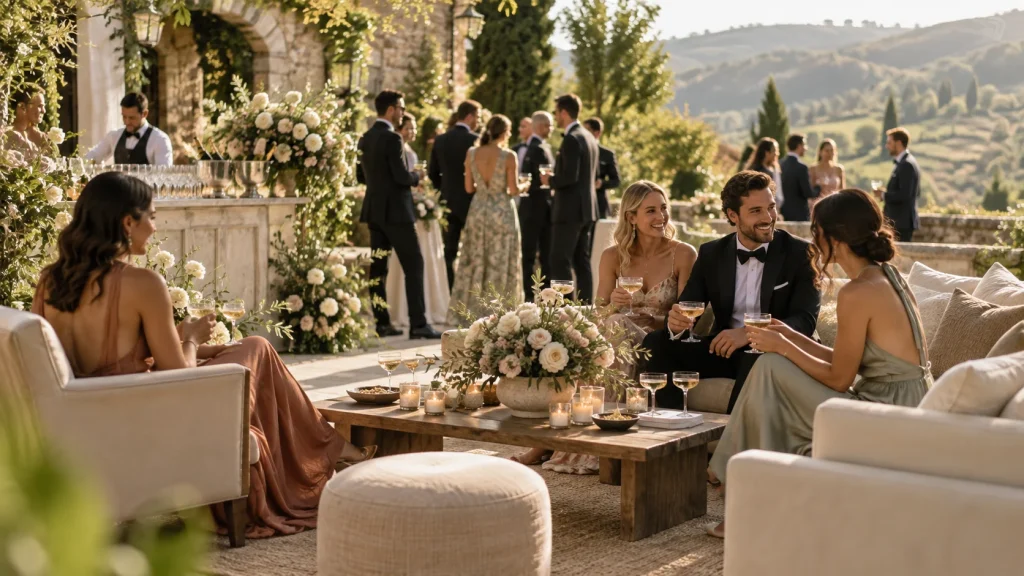
Guests notice flowers and tables, but the things that shape how a wedding feels are often more practical: knowing where to go, being able to hear, having somewhere to sit, getting food at the right time and understanding what happens next. A beautiful room cannot compensate for a day that is difficult to be in.
1. Whether arrival is obvious
Send the postcode, parking instructions and realistic arrival time. At large estates or rural venues, “follow the signs” is not enough unless the signs actually begin at the entrance guests will use.
2. Whether the ceremony can be heard
If more than a small group is attending, test amplification. Wind, traffic, fountains and high ceilings swallow speech quickly. A discreet microphone usually improves the ceremony more than another decorative aisle feature.
3. Whether there is somewhere to sit
Standing drinks receptions can be sociable, but not everybody can comfortably stand for an hour. Provide enough seating for older guests, pregnant guests, disabled guests and anyone in formal footwear.
4. Whether the gaps make sense
Photography and room resets take time. If guests have a long gap, give them food, drink, shade or an activity that is genuinely optional. Do not make them feel as if they are waiting for the wedding to resume.
5. Whether they are hungry or thirsty
A long ceremony-to-dinner interval needs substantial canapés. Outdoor summer events need visible water. Late-night alcohol needs late-night food. These are not luxuries; they are basic hospitality.
6. Whether the temperature is bearable
Shade, fans, umbrellas, blankets, heaters and coat storage can transform comfort. Plan for the likely weather rather than the ideal photograph.
7. Whether the bar can serve the room
A beautiful cocktail is irrelevant if 150 people are queuing for one bartender. Ask the venue how many service points and staff are planned for your guest count.
8. Whether speeches have boundaries
Tell speakers how long they have and when they are speaking. Three focused speeches are often more enjoyable than an open-ended sequence that delays dinner or dancing.
9. Whether the day feels like the couple
Guests respond to specific choices: a song with a story, food the couple actually loves, a family reading, a venue with meaning. Personality is more memorable than trying to make every detail “impressive”.
A guest-experience check before the wedding
Walk through the entire day from the perspective of someone who has never visited the venue. Start at the car park or station and finish with getting home. Every point where you have to say “they’ll work it out” deserves another look.
Make essential information easy to find
Guests should not have to search old messages for the address, transport plan, dress code or finish time. Put the current information in one place and date important updates. If plans change on the day, nominate one contact who is not the couple.
Describe accessibility properly
“Accessible” is not enough detail for many guests. Explain step-free routes, distances between spaces, seating, accessible toilets, parking and whether assistance is available. Ask the people affected what information they need rather than guessing on their behalf.
Make leaving as easy as arriving
Publish taxi information, coach departure times and the final bar or music time. Make it possible to leave early without embarrassment. A good transport plan considers the first guest who needs to go home as carefully as the last person on the dance floor.
Test transitions, not just individual moments
The difficult parts of a wedding often happen between the attractive ones: moving from ceremony to drinks, finding a table, waiting for a room reset or locating transport after dark. Walk each transition with realistic timings and ask what a guest can see, hear and do while waiting.
Connect comfort with the wider plan
A multi-day celebration needs recovery time as well as activities; our guide to planning a wedding weekend covers that balance. The wedding décor guide explains how visual choices can support wayfinding and conversation instead of competing with them.
The final hospitality test
Give the schedule and guest information to somebody who was not involved in planning. Ask them to explain where they would go, what they would wear, when they would eat and how they would return home. Any hesitation reveals a useful improvement before the wedding day.