Wedding Style
Fall Wedding Flowers in 2026: Colour, Texture and What Real Weddings Are Doing
·The Wedding Ring Blog Editorial Team
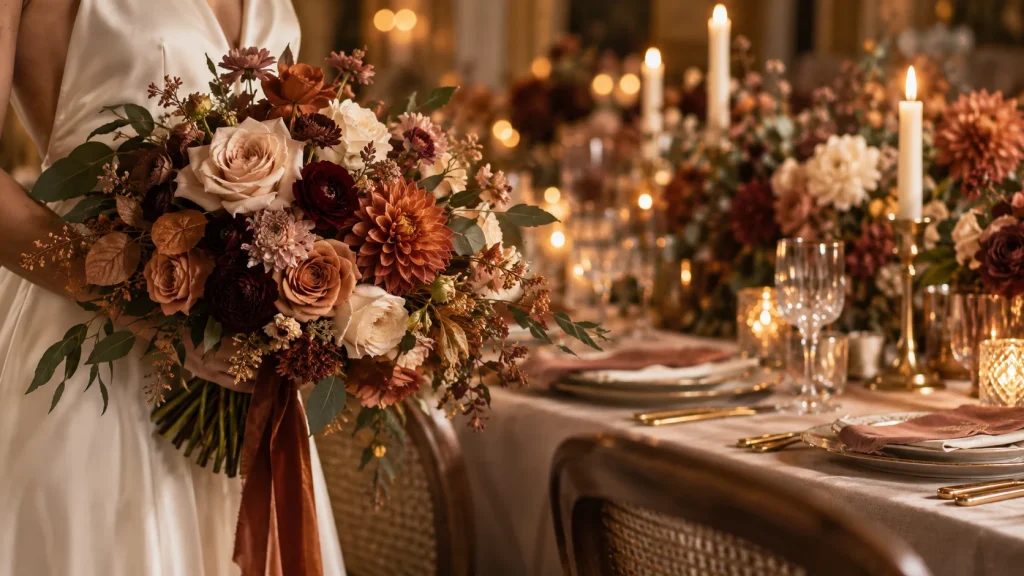
Autumn wedding flowers do not have to mean burgundy roses, orange leaves and pumpkins. The strongest seasonal arrangements usually feel autumnal because of texture, movement and what is naturally available, not because every object has been pushed into the same rust-coloured palette.
Start with the month, not the mood board
Ask your florist what is locally or regionally strong at the time of the wedding. Exact availability varies by year and supplier, so a flexible palette often produces better flowers than insisting on one named variety regardless of season.
Use foliage as structure
Branches, grasses, seed heads and changing leaves can create scale and movement. They are especially effective in large rooms where small flower heads disappear from a distance. A branch-led installation can also feel more naturally seasonal than adding artificial autumn props.
Autumn colour can be quiet
Ivory, tobacco, dusty pink, olive, faded apricot, plum and warm brown can read as autumn without becoming themed. If you love brighter colour, use it; seasonality is not a rule that requires muted arrangements.
Let different arrangements do different jobs
- Bouquet: proportion and movement matter because it is carried.
- Ceremony: scale matters because guests see it from a distance.
- Dining tables: sight lines matter because people need to talk across them.
- Bar or entrance: one generous arrangement can have more impact than many tiny pieces.
Plan for earlier darkness
Autumn receptions often spend more time under artificial light than summer weddings. Check flowers in the room at the time of day they will actually be seen. Deep reds and purples can disappear in low light; pale flowers and reflective foliage can hold detail better. Candlelight can add warmth, but confirm venue rules before designing around open flames.
Reuse where the timing makes sense
Ceremony arrangements may be movable to the reception, but build the plan around real travel time and staff access. A florist cannot teleport a large installation while guests are walking into the next room. Ask exactly which pieces can be moved and who will move them.
A simple brief for your florist
Instead of specifying twenty flower names, give the florist five useful inputs: the venue, date, approximate palette, level of formality and photographs showing the amount of movement or structure you like. Then ask what will be at its best that week.
Give the florist a priority order
If the budget changes or a variety is unavailable, the florist needs to know what matters most. Rank colour, overall shape, movement, fragrance and specific flowers instead of describing every preference as essential. That gives a professional room to substitute intelligently while keeping the design recognisably yours.
Budget for mechanics and labour
Large arrangements are not priced only by the number of stems. Vessels, frames, safe fixings, transport, setup, room-turnaround time and collection after the wedding all affect cost. Ask for a proposal that distinguishes personal flowers, ceremony pieces, reception flowers, hire items and labour so reductions can be made deliberately.
Think about scent, pollen and access
Strongly scented flowers can be distracting on dining tables, while loose pollen or shedding seed heads may mark clothing and linens. Keep arrangements away from accessible routes, handrails and the space needed by wheelchair users or service staff. If anybody central to the day has a serious allergy, raise it with the florist early rather than relying on last-minute removal.
Plan the end of the night
Decide who owns hired vessels, who may take flowers home and what can realistically be donated or composted. Guests appreciate a clear invitation to take table flowers; they are less likely to do it if expensive containers appear to be part of the arrangement. Coordinate flowers with the wider wedding décor plan so one strong seasonal idea is repeated rather than competing with several themes.