Wedding Style
Country Wedding Dress Code: A Practical Guide for the Groom and Wedding Party
·The Wedding Ring Blog Editorial Team
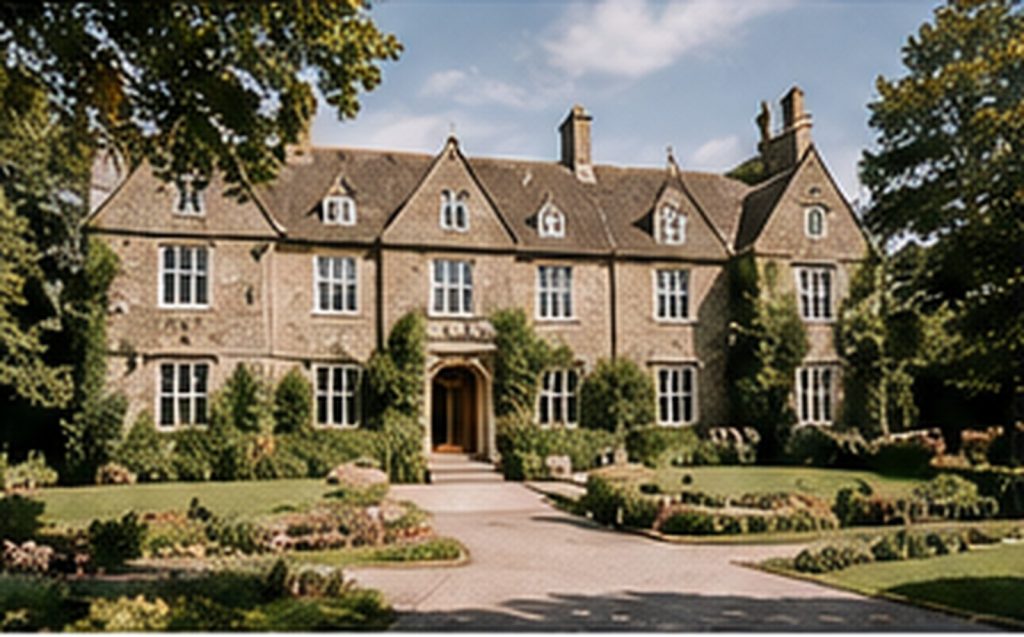
“Country wedding” describes a setting, not one compulsory outfit. The strongest tailoring takes cues from the venue, season and level of formality without turning every rustic detail into a costume reference.
Start with how formal the wedding actually is
A country house can host a highly formal celebration; a barn or farm venue may be more relaxed. Setting alone does not determine the dress code.
Tweed works because of texture, not because it is rural shorthand
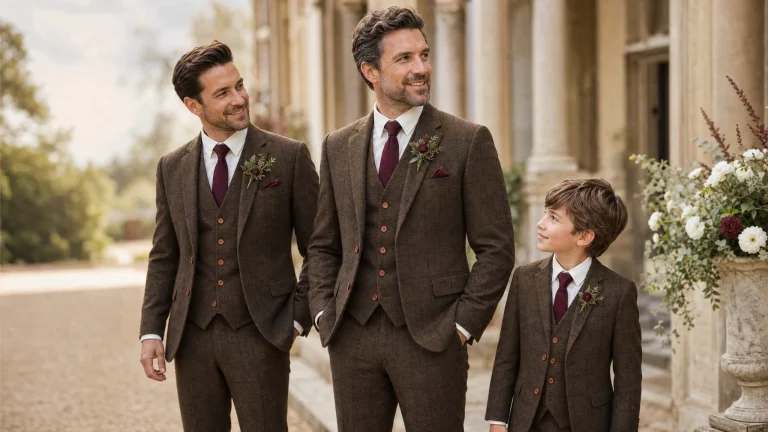
A good tweed suit or jacket brings visible texture and can sit naturally in cooler seasons and countryside settings. Keep the cut and styling intentional.
Colour can echo the landscape without copying it
Brown, olive, navy, grey and muted checks are easy to coordinate with seasonal flowers and natural settings. Avoid forcing every accessory into the same palette.
Waistcoats can create structure
A waistcoat can distinguish the groom, tie different suits together or keep the outfit looking complete when jackets come off later in the day.
Footwear should suit the ground as well as the suit
Polished formal shoes may be perfect for a country house but less practical on rough grass or farm tracks. Choose footwear with the actual movement of the day in mind.
Coordinate rather than clone
Wedding parties often look better when they repeat formality, colour family or texture while allowing individual sizing and small variations.
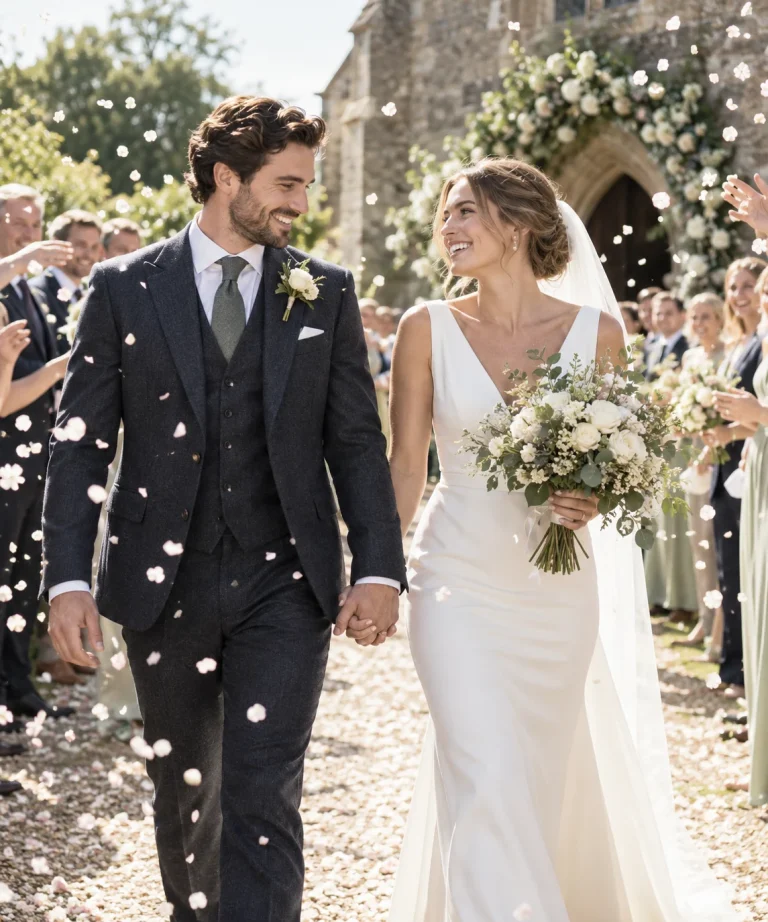
A formal country-house wedding can justify polished dark tailoring, morning dress or another clearly structured dress code. The countryside setting gives you access to texture and colour; it does not automatically lower the level of formality.
Grass, gravel and uneven ground are part of the clothing decision. Footwear should still look intentional with the suit, but a sole and construction suited to the actual venue can be more useful than a delicate shoe chosen only for photographs.
Tweed does not have to mean a full three-piece suit
A tweed jacket, textured waistcoat or cloth used only by the groom can introduce the country character without placing the whole wedding party in matching checks. This is particularly useful when different people already own appropriate trousers or suits.
Season changes the cloth
Heavier wool or tweed may suit a cool-weather celebration, but consider heated rooms and how long you will wear it. In warmer months, compare lighter cloth and construction. Fibre name alone does not guarantee comfort: weight, weave, lining and fit matter too.
Buttonholes are an easy place to repeat a seasonal colour or texture from the flowers. Exact matching is optional. Decide which details should repeat and which can vary, then view the complete outfits together instead of judging isolated product images.
One useful rule
If removing the venue from the photograph would make the outfit look like fancy dress, simplify it. Good country wedding tailoring should still look like good tailoring.
See the Tweed Wedding Suits guide for cloth-specific advice and the Wedding Suit Guide for the broader dress-code framework.
Venue and weather checklist
- Check whether important parts of the day are outdoors.
- Ask about grass, gravel, heating and evening temperature.
- Choose texture because it suits the setting—not because every country wedding must use tweed.
Use the Wedding Suit Guide, tweed and country tailoring guide and fabric guide to refine the choice.
Match the outfit to the actual day
Use the invitation first, then refine the outfit for the venue. These examples help organise the decision; they do not replace the couple’s requested dress code.
- Country-house ceremony with an indoor reception
- Start with the stated formality. If lounge suits are requested, a well-fitting suit and appropriate shoes may be enough; neither tweed nor boots are automatically required by the location.
- Barn venue with photographs on grass
- Ask which routes are paved and where guests will stand. Keep the intended level of tailoring, but test the shoes on a comparable surface and plan how to keep hems away from mud. A spare pair for travel is different from changing the ceremony dress code.
- Outdoor summer ceremony
- Check shade, walking distance and the indoor arrangements afterwards. Compare the cloth and lining in person where possible. A rural setting does not make a heavy three-piece outfit comfortable in hot weather.
Make one plan for weather and transport
- Confirm the ceremony, drinks and reception locations, including any walks between them.
- Check whether a coat or umbrella can be stored nearby without being carried through every photograph.
- Arrange a clean place to dress and hang the suit if you are travelling in casual clothes.
- Bring the footwear you will actually wear to the fitting.
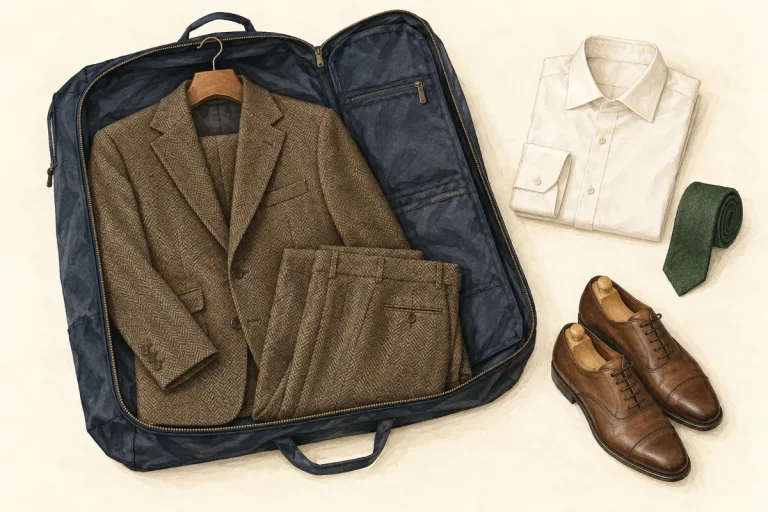
- Pack any change of shoes separately from clean clothing.
Our wedding suit packing checklist covers the garment bag and accessories. For a wedding party using different suits, agree the dress-code level and shared details before anyone orders.