Wedding Style
Wedding Suit Timeline: When to Order, Fit and Finalise the Groom’s Suit
·The Wedding Ring Blog Editorial Team
The useful deadline for a wedding suit is not simply the wedding date: it is the date you need to leave with a complete, fitted outfit. Plan backwards from that point, using the supplier’s current production, fitting and alteration schedule rather than a universal number of weeks.
Start with the outfit brief
Before booking fittings, confirm the venue, season and dress code. Decide whether you are buying, hiring or having a suit made. Agree the overall budget, including alterations, shirt, shoes and accessories, so a bargain jacket does not hide an expensive unfinished outfit.
Our Wedding Suit Guide covers the main options. Use the UK wedding dress-code guide if the invitation or venue leaves the level of formality unclear.
Build the timeline backwards
- Wedding and travel dates
- Record the ceremony date, departure date and any earlier event requiring the outfit. For a destination wedding, the final fitting must happen before departure, not just before the ceremony.
- Collection deadline
- Agree when the finished outfit will be available, how it will reach you and what happens if a correction is needed. Avoid making the first full outfit check on collection morning.
- Final fitting and alterations
- Ask the tailor how much time they need after the fitting and whether there is room for another appointment. Bring the actual shirt and shoes, rather than substitutes with a different collar or heel height.
- First fitting or delivery
- Confirm when there will be a garment to assess, who is responsible for alterations and whether that work is included in the quote.
- Order deadline
- Get the supplier’s deadline for the exact cloth, size and service you want. A general website estimate is not confirmation that your order will be ready.
Put each agreed date in one shared note, together with the supplier contact and the person responsible for the next step. Leave the amount of contingency the supplier recommends rather than assuming every correction can be done overnight.
Buying, hiring and having a suit made need different checks
Ready-to-wear
Check that the jacket and trousers are both available in the required sizes before committing. Confirm the return window and whether alterations make the purchase non-returnable. Ready-to-wear avoids a production stage, but not necessarily fitting or tailoring work.
Made-to-order or bespoke
Ask when measurements, cloth selection and design choices must be finalised. Record the number and location of fittings, expected delivery and the policy if the fit needs correction. Do not equate a production estimate with the date a fully altered outfit will be in your hands.
Hire
Confirm collection, any permitted adjustments, what accessories are supplied and the return deadline. Check the outfit promptly when it arrives. Include the return journey in your plan if you are leaving on honeymoon.
Coordinate the wedding party without delaying your own outfit
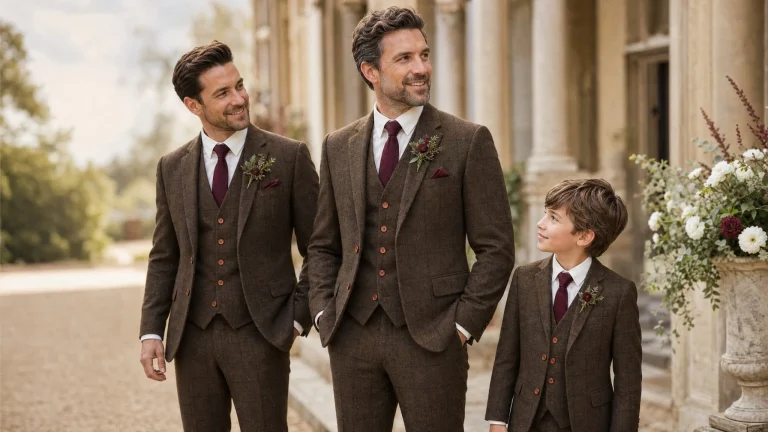
Agree which elements need to match before anybody orders. Record each person’s size requirements, availability, location and payment responsibility privately; there is no need to circulate everybody’s measurements in a large group chat.
Nominate one organiser to confirm the outstanding orders and fittings. If somebody cannot attend a group appointment, ask the supplier how remote measurements are handled and how fit will be checked. Do not treat a size label from another brand as a verified measurement.
The complete-outfit fitting checklist
- The shoulders and collar sit cleanly without obvious gaps or pressure.
- The jacket closes comfortably without pronounced pulling.
- You can sit, walk and move your arms naturally.
- The trouser waist is secure without relying on an overtight belt.
- The trouser length works with the actual wedding shoes.
- The intended shirt cuff and waistcoat coverage look right together.
- Shoes, socks, tie, braces and any cufflinks are all present and compatible with the outfit.
Tell the fitter where something feels restrictive. Not every problem can be solved by a small alteration, so get the proposed correction explained before approving it. For black-tie requirements, see our black-tie wedding guide; for material choices, compare wedding suit fabrics.
After the final fitting: protect the result
Check the outfit again on collection, then follow its care instructions. Confirm any pressing arrangements and avoid experimenting with a new steamer or cleaning product the night before the wedding.
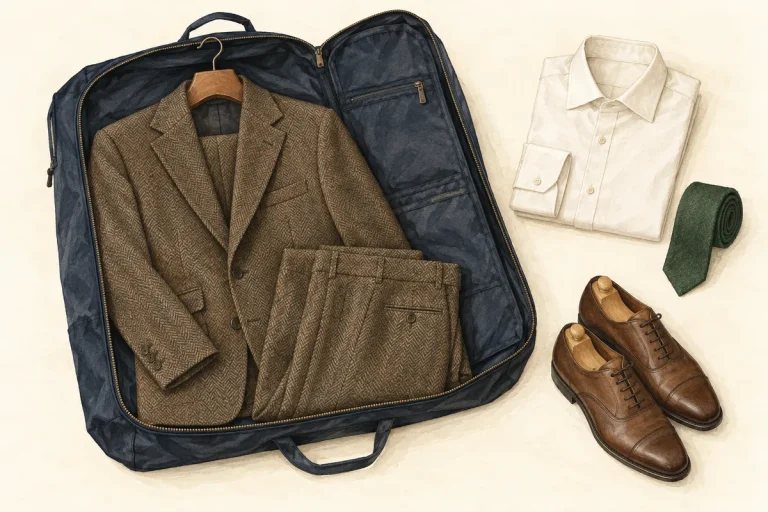
Use our wedding suit packing checklist to organise the garment bag, accessories and a small backup kit. Save the supplier’s contact details and hire-return instructions where the person helping on the day can find them.
What if the wedding is close?
Tell the supplier the true deadline immediately. Ask what is genuinely available, what alterations can be completed and what compromises would be needed. Prioritise a comfortable, complete outfit over a last-minute redesign. Do not order against an unconfirmed delivery promise simply because a generic checklist says there is still time.