Planning
What Semi-Formal Really Means for a 2026 Wedding
·The Wedding Ring Blog Editorial Team
“Semi-formal” is one of the least precise wedding dress codes. It usually means polished and occasion-appropriate without the full rules of black tie, but the right outfit depends on the venue, time of day, weather and how the couple has described the event.
What semi-formal means in practice
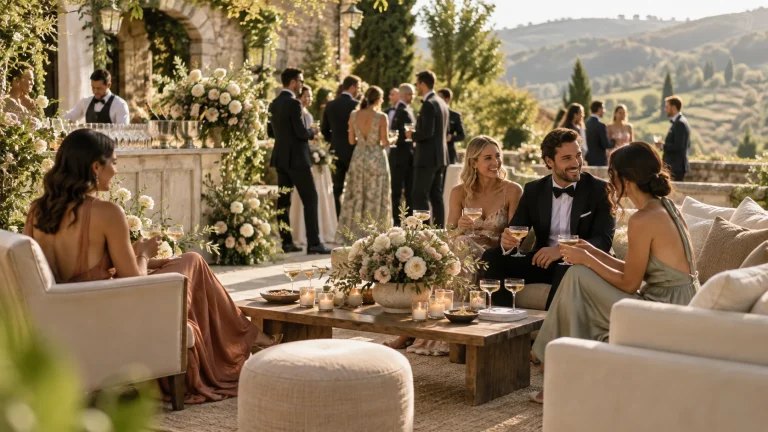
Think one step above everyday smart clothes and one step below a formal evening dress code. For many guests that means a suit, tailored separates, a midi or cocktail-length dress, a dressy jumpsuit, or another outfit with comparable polish. A tie may be appropriate but is not automatically essential unless the invitation or setting suggests it.
Use the invitation as a hierarchy of clues
- Explicit wording: follow any examples the couple gives.
- Venue: a country house, city restaurant and beach hotel imply different fabrics and footwear.
- Time: evening usually supports darker, dressier clothing; daytime allows lighter colour and texture.
- Season: comfort matters. Heavy velvet in July and flimsy linen in November solve the wrong problem.
For suits and tailored outfits
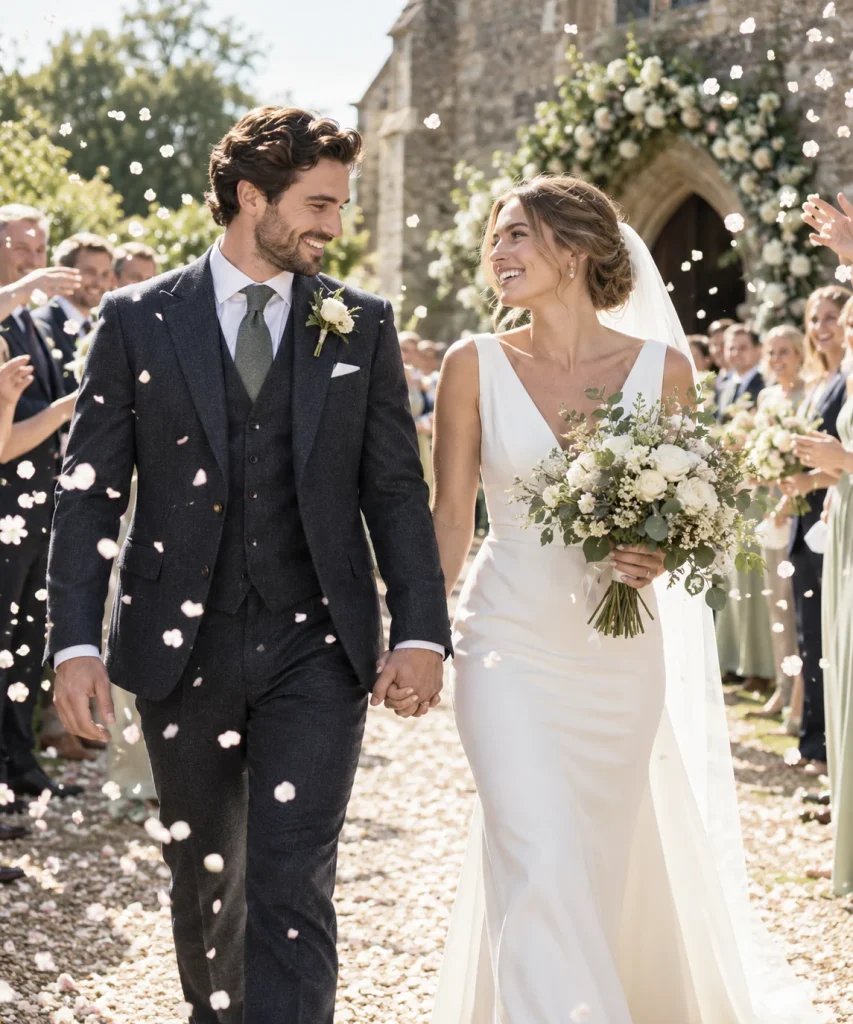
A well-fitting navy, charcoal, brown or seasonal suit is usually safe. Shirts should look deliberate rather than office-casual. Polished loafers, derbies, oxfords or similarly refined footwear work better than trainers unless the invitation explicitly welcomes them. Tweed can suit autumn and country settings; a dinner jacket generally pushes the outfit closer to black tie.
For dresses, jumpsuits and separates
There is no required hemline. The useful test is whether the fabric, cut and styling read as occasionwear in that setting. Avoid relying on “not white” as the only rule: very bridal ivory, full bridal lace or anything that could plausibly be mistaken for the wedding outfit is best avoided unless the couple has asked for a white dress code.
How couples can word it more clearly
Country house: “Semi-formal. Suits, dresses and smart separates; please choose footwear suitable for some time outdoors.”
City evening: “Semi-formal / cocktail attire. Jackets encouraged; ties optional.”
Summer garden: “Semi-formal summer attire. Lightweight tailoring, dresses and dressy separates welcome.”
What not to do
Do not label an event semi-formal while every other cue says black tie, then be surprised when guests ask questions. Dress codes work when the invitation, venue and level of formality tell the same story.
The simplest rule for guests
If you are unsure, it is usually better to arrive slightly more polished than slightly too casual. Choose clothes that fit well, suit the setting and let you sit, eat and dance comfortably. That is more useful than trying to decode a dress-code label as though it were law.
When the invitation still leaves you unsure
Ask one concise question about the point that changes the purchase: whether jackets or ties are expected, whether part of the day is outdoors, or whether a surface makes particular shoes impractical. Do not ask the couple to approve a complete outfit unless they have invited that level of coordination.
Comfort and accessibility belong in the dress code
A polished outfit still needs to work for steps, grass, heat, cold and the amount of standing involved. Hosts can help by mentioning outdoor sections, uneven ground and available cloakrooms. Guests who use mobility aids or need adapted clothing should interpret the requested level of formality in a way that works safely and comfortably for them.
One good outfit can cover most semi-formal weddings
A versatile suit or tailored base can change with shirt, tie, jewellery, shoes and outerwear. The same principle works for dresses, jumpsuits and separates. Buying a completely new themed outfit for every invitation is rarely necessary; good fit, appropriate fabric and considered styling carry more weight than novelty.
How semi-formal differs from nearby dress codes
- Smart casual: more relaxed tailoring and fewer traditional occasionwear expectations.
- Cocktail: often overlaps with semi-formal but can suggest a sharper evening mood.
- Black tie optional: permits a dark formal suit but sits noticeably above ordinary semi-formal.
- Black tie: calls for dinner dress rather than a standard lounge suit.
For the more formal end of the spectrum, use our black-tie wedding guide. Country and autumn celebrations may also suit the textures discussed in our tweed weddingwear guide.