Wedding Style
Black Tie Wedding Style: What the Groom and Groomsmen Should Know
·The Wedding Ring Blog Editorial Team
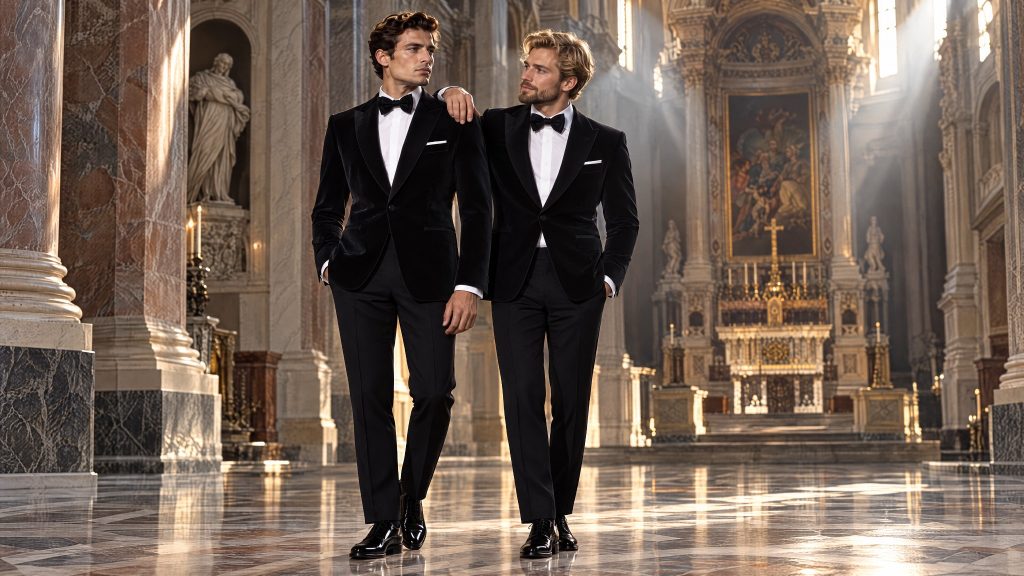
Black tie wedding style is formal, but it should not feel like costume. The aim is a clean evening silhouette: dark tuxedo or dinner suit, formal shirt, bow tie and polished shoes, with enough consistency across the wedding party to look intentional.
What black tie actually asks of the wedding party
Black tie is an evening dress code built around a dinner suit rather than an ordinary business suit. The traditional formula is a black or midnight-blue dinner jacket and matching trousers, a white evening shirt, a black bow tie and polished black shoes. A waist covering may be used, but novelty waistcoats, bright neckties and office shirts pull the outfit away from black tie.
That does not mean every member of the wedding party has to look identical. Consistency should come from the level of formality, the cloth and the overall colour story. Small differences in lapel shape, shirt front or accessories can help each person feel comfortable without making the photographs look disjointed.
Your black-tie outfit checklist
- Jacket and trousers: choose a coordinated dinner-jacket outfit, not an office suit with a bow tie added.
- Shirt: a white evening shirt; check whether its front needs studs and whether its cuffs need cufflinks.
- Bow tie: black is the straightforward traditional choice. Try tying and adjusting it before the wedding morning.
- Shoes and socks: polished black formal shoes and dark dress socks; wear the shoes at the fitting to judge trouser length.
- Waist covering: if using a formal waistcoat or cummerbund, choose one rather than both.
For the traditional British interpretation, see Debrett’s dress-code guidance. If the couple has specified a different interpretation, ask them rather than assume.
Fit matters more than expensive labels
A well-fitted hired dinner suit will normally look better than an expensive one that is too long in the sleeve or collapses through the shoulders. Check jacket length, trouser break, collar contact and whether the jacket closes without pulling. Arrange a final try-on early enough to correct obvious problems, especially where several groomsmen live in different places.
A five-minute fitting check
- Stand naturally: the jacket collar should sit against the shirt collar, without a pronounced gap or pulling across the back.
- Fasten the jacket: obvious pulling around the button is a reason to try another size or cut, not simply undo it for every photograph.
- Sit down: check the trouser waist and seat while seated, as well as standing.
- Use the actual shirt and shoes: check sleeve length, cuff visibility and trouser length with the accessories you will wear.
- Move: walk, raise your hands and practise a comfortable embrace. Tell the fitter where movement feels restricted.
Ask which alterations are included, their deadline and whether the hire terms permit them. Jacket shoulders and length are not changes to assume can be solved by a quick hem.
Match the dress code to the venue and timing
Black tie feels most natural for an evening reception, a formal hotel, a city venue or a celebration with a structured dinner. For a summer afternoon ceremony, a relaxed rural venue or a beach setting, insisting on full eveningwear may work against the atmosphere and the comfort of the people wearing it. If the invitation says “black tie optional”, explain what that means in practical terms instead of leaving guests to guess.
What does “black tie optional” mean?
A dinner-jacket outfit remains appropriate, but a dark suit with a white shirt and restrained tie is also an accepted option. It does not mean jeans or an open-necked casual outfit. The Emily Post Institute distinguishes black tie optional from strict black tie.
For a wedding party, decide together whether the groom and attendants will wear dinner jackets or dark suits. Give guests a clear dress-code note; do not expect them to infer the rule from a venue photograph.
A practical ordering timeline
- Four to six months before: decide whether the party will hire or buy and confirm the dress code.
- Two to four months before: collect measurements and book fittings.
- Two to three weeks before: complete final try-ons and resolve size changes.
- The week of the wedding: check every component, including shoes, shirt, bow tie, cufflinks and spare fastenings.
Where Luxedo fits
If the wedding needs coordinated formalwear rather than a collection of unrelated suits, Luxedo Suits is the relevant specialist partner to explore. Treat it as a starting point for styles and group coordination, then confirm availability, measurements, lead times and alteration arrangements directly.
Commercial relationship: Luxedo Suits is a weddingwear partner of The Wedding Ring Blog. This relationship does not change our guidance on fit, formality or suitability.
For a different tailoring approach, see our guide to tweed wedding suits for country and autumn weddings.