Rings & Jewellery
Wedding Ring Care Guide: Cleaning, Polishing, Replating and Annual Checks
·The Wedding Ring Blog Editorial Team
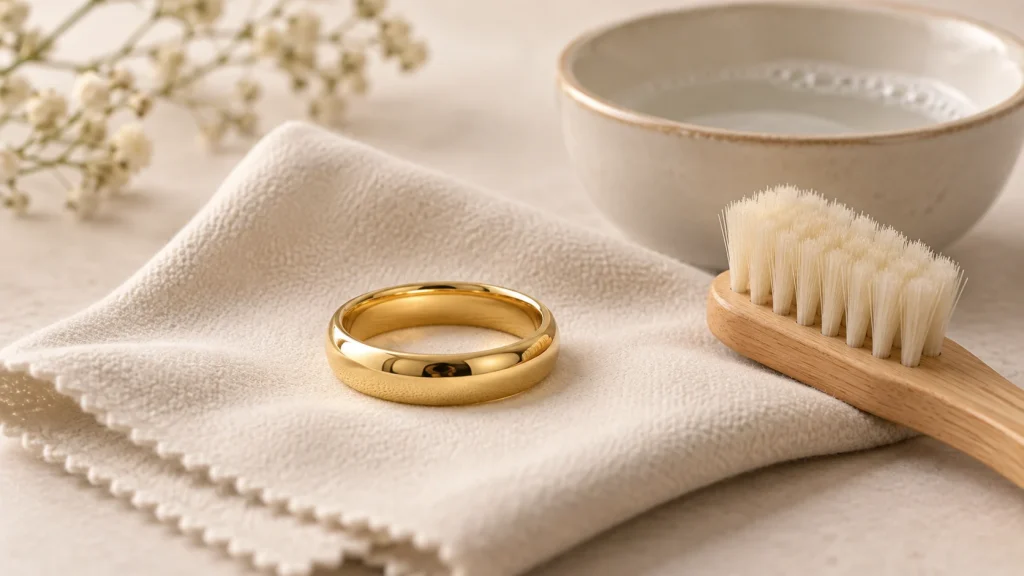
A wedding ring does not need to look brand new forever. Fine scratches and patina are normal signs of daily wear. Good care is mainly about keeping the ring clean, structurally sound and comfortable.
Simple home cleaning
For many plain gold and platinum wedding bands, warm water, a small amount of mild soap and a very soft brush are enough to remove ordinary skin oils and residue. Rinse carefully and dry with a soft lint-free cloth.
Stone-set rings need more caution. Do not assume every gemstone, treatment or setting is safe for ultrasonic or steam cleaning. If you do not know exactly what the stones are, ask the jeweller before using specialist equipment or strong chemicals.
Do not treat an ultrasonic cleaner as a default
GIA’s diamond-cleaning guidance warns that ultrasonics can loosen stones and damage some treated diamonds. It also advises avoiding chlorine bleach and abrasive household cleaners, including toothpaste. If treatment or setting condition is unknown, have a jeweller assess the ring rather than experimenting with a stronger cleaning method.
Care by ring type
- Yellow/rose gold
-
Home routine: Gentle soap-and-water cleaning.
Professional issue to watch: Deep wear, thinning, damaged edges. - White gold
-
Home routine: Gentle cleaning.
Professional issue to watch: Rhodium plating may be renewed if you want the bright-white finish restored. - Platinum
-
Home routine: Gentle cleaning; patina can be left alone.
Professional issue to watch: Professional refinishing if a brighter finish is desired. - Diamond-set band
-
Home routine: Clean carefully around settings.
Professional issue to watch: Loose stones, worn claws/prongs, damaged channels. - Alternative metal
-
Home routine: Follow maker instructions.
Professional issue to watch: Coatings, specialist finishes and replacement policy.
Can you polish a wedding ring too much?
Yes. Abrasive polishing removes metal; ordinary cleaning removes surface dirt and oils. Repeatedly chasing every fine scratch is different from keeping a ring clean. Tiffany’s care guidance recommends professional polishing only occasionally over a piece’s lifetime. Ask your own jeweller what is appropriate for the exact band, finish and condition rather than following an automatic annual polishing schedule.
Clean gently
For a suitable plain band, use the gentle cleaning routine above. A wash will not remove a scratch or rebuild worn metal.
Discuss refinishing
Tell the jeweller if you want to keep a brushed, satin, hammered or patinated surface. Compare the different ring finishes before approving work.
Inspect before polishing
A loose stone, distorted band or catching claw needs assessment. Use the care-appointment checklist to agree the job and quote.
There is no universal safe number of polishing sessions for every ring. If the band looks thin or details have softened, ask for an inspection rather than trying a more abrasive home product.
White gold and rhodium
Many white-gold rings are rhodium plated. As the plating wears, the underlying white-gold alloy may become visible, particularly on high-contact areas. Replating is cosmetic maintenance, not evidence that the ring has failed.
Platinum patina
Platinum develops a distinctive surface patina. Some owners prefer it. Others have the ring polished periodically. There is no requirement to keep platinum mirror-bright.
When to stop wearing the ring and get it checked
- a stone moves or rattles;
- a claw/prong looks bent or catches clothing;
- the band becomes visibly distorted;
- the ring has taken a hard impact;
- a deep groove develops where another ring rubs against it;
- the ring suddenly feels sharp or rough.
Rings and exercise/work
Remove rings when an activity creates a snagging, crushing or contamination risk. Heavy lifting, machinery and some manual work can damage jewellery and injure fingers. Follow workplace rules rather than assuming a “strong” metal makes a ring safe in every setting.
Store rings separately
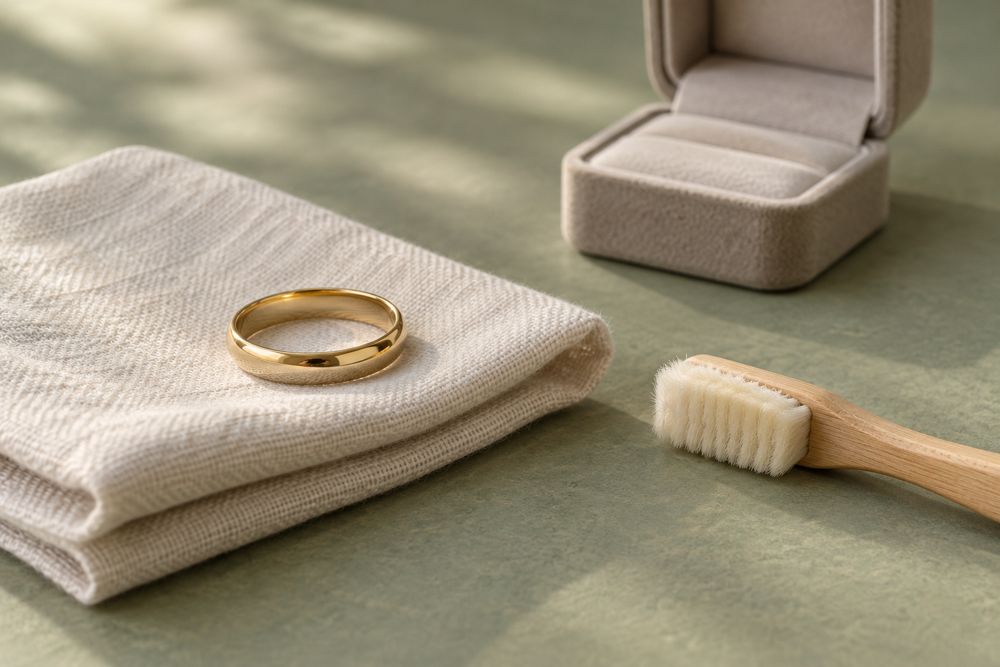
Hard gemstones and metals can scratch other jewellery. When a ring is removed, place it in a secure ring box or soft compartment rather than loose in a wash bag or handbag.
What to ask at a professional care appointment
Explain what has changed: a snagging claw, a loose-feeling stone, a sharp edge, a change in fit or simply a finish you want restored. Inspection, cleaning, polishing, replating and repair are different tasks; ask which work the jeweller recommends for your ring and why.
- Agree the work: confirm the proposed treatment and quote, including whether the ring will be sent to another workshop.
- Discuss the finish: say whether you want to keep a satin, brushed, hammered or patinated appearance. Do not assume “polish” describes the result you want.
- Record identifying details: photograph the hallmark and engraving before handing the ring over. Ask whether the proposed work affects either.
- Plan collection and follow-up: confirm the expected date, what will be checked on collection and the recommended inspection interval for this design.
If fit has changed, use our resizing guide to prepare questions. For the appearance you want to preserve, compare the ring finish guide.
Keep a photographic record
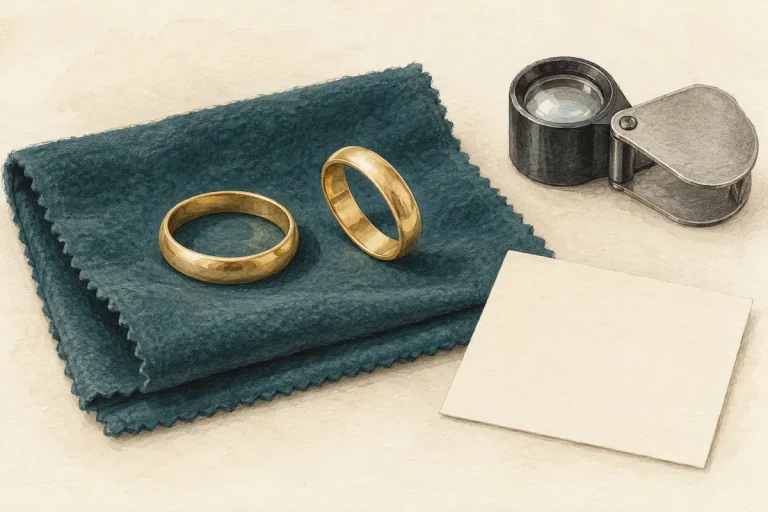
Photograph the ring from the top, side and inside, including the hallmark and engraving. Those images are useful for insurance, repair discussions and identifying changes over time.
For material-specific behaviour, see Wedding Ring Metals Explained.