Rings & Jewellery
Wedding Ring Resizing: What Can and Cannot Be Changed Later
·The Wedding Ring Blog Editorial Team
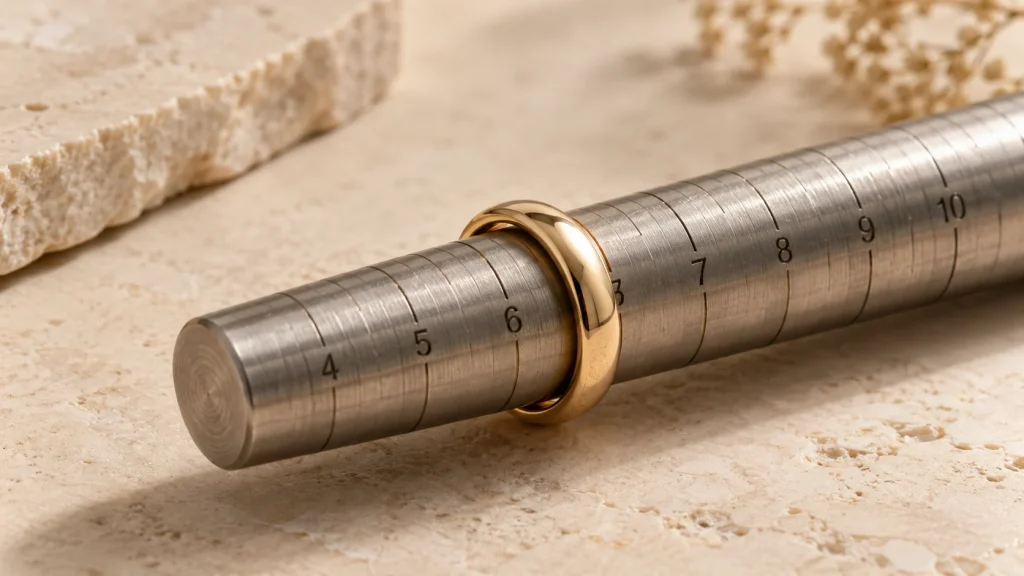
Resizing is easy to assume and expensive to misunderstand. A plain precious-metal band may have useful flexibility later, while a full-eternity ring, patterned design or alternative-metal band can be much more restrictive.
Why some rings are straightforward to resize
Traditional resizing usually involves cutting the band, adding or removing material, reshaping it and refinishing the surface. A plain gold or platinum band gives a skilled jeweller relatively predictable material to work with.
Why design changes the answer
Continuous engraving, repeating patterns, mixed materials and stones around the full circumference can prevent a conventional resize or make the result visibly different from the original.
When stones and settings run all the way around the band, there may be no plain section available for an ordinary size adjustment. Ask about the exact design before buying rather than relying on a general store policy.
Titanium, tungsten carbide and some stainless-steel designs are often sold with limited or no conventional resizing. Replacement policies can therefore matter as much as workshop capability.
How much can a ring usually change?
There is no responsible universal number. Metal, design, setting, width, thickness and the size change itself all matter. Ask the jeweller who would actually perform the work.
Confirm fit before engraving where possible. Changing size after an inscription has been added can affect its position or require it to be re-cut.
Questions to ask before buying
- Can this exact design be resized?
- What range of adjustment is realistically possible?
- Would the original finish or pattern be recreated?
- What happens to engraving?
- If resizing is not possible, is there a replacement-size policy?
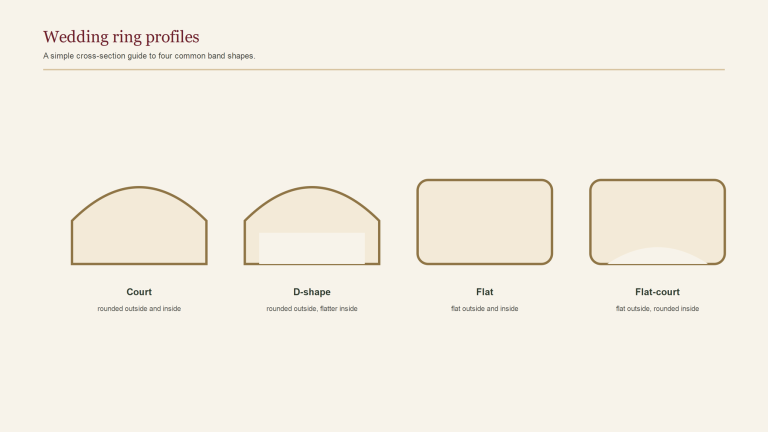
Size change is only one part of the job. A jeweller also has to preserve the ring’s profile, thickness, finish and any decorative detail. A broad flat-court band may need different handling from a narrow traditional court band even when both are made from the same alloy.
Stone-set shoulders can also restrict where material can be added or removed. If the ring carries channel-set or pavé stones, altering its circumference changes the geometry around those settings and may require more than a simple cut-and-join operation.
When should you resize rather than replace?
For a plain precious-metal band with sentimental value, resizing is often the obvious first question. Replacement becomes more realistic when the material cannot be conventionally worked, the pattern runs continuously around the band, the required change is substantial, or previous alterations have already changed the ring’s structure.
There is no shame in a replacement ring. If the original has emotional significance, it can be retained safely while a new daily-wear band is made in the correct size.
What about temporary size changes?
Finger size can move after weight change, pregnancy, illness, temperature changes or simply over time. If the change may be temporary, ask a jeweller about reversible solutions such as sizing beads or other internal adjustments before permanently altering the band.
UK hallmarks are normally small, but work near the mark should be discussed before alteration. Preserve clear photographs of the original hallmark and ask where any new work will be carried out.
Before authorising the work
- Ask who will actually perform the resize and whether it is done in-house.
- Confirm whether stones will be checked before and after the work.
- Ask whether the original finish can be recreated.
- Confirm how engraving will be handled.
- Ask what happens if the first adjusted size still does not fit correctly.
For the underlying fit decision, use our Wedding Ring Sizing Guide. For profiles and how they affect feel on the finger, see Wedding Ring Profiles Explained.