Rings & Jewellery
Eternity Rings Explained: Full, Half and Three-Quarter Bands
·The Wedding Ring Blog Editorial Team
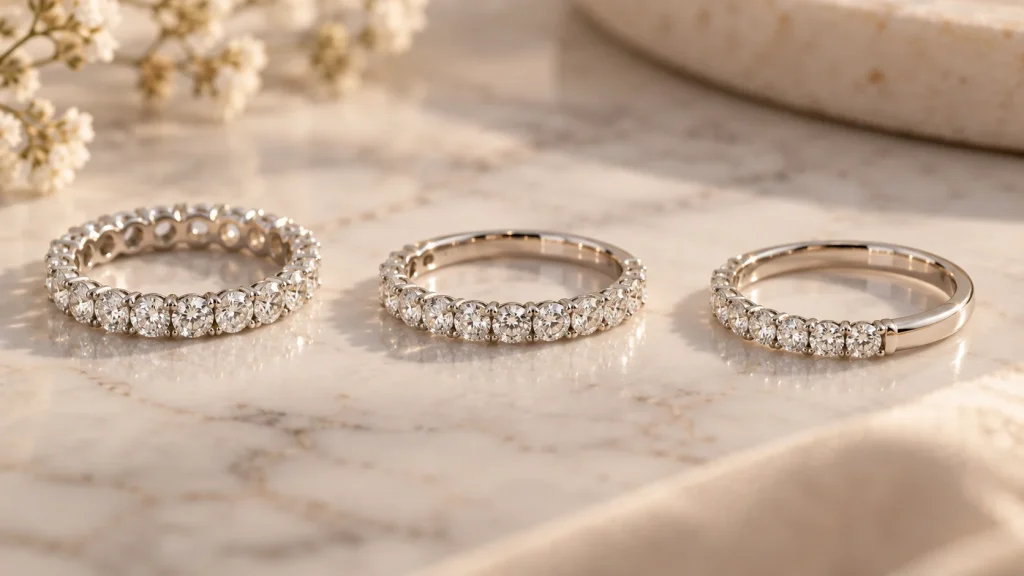
Full, half or three-quarter? Stone coverage changes more than the sparkle. Here is how to compare the view, the fit and the work a ring may need later.
Buying guide · Updated 16 October 2026
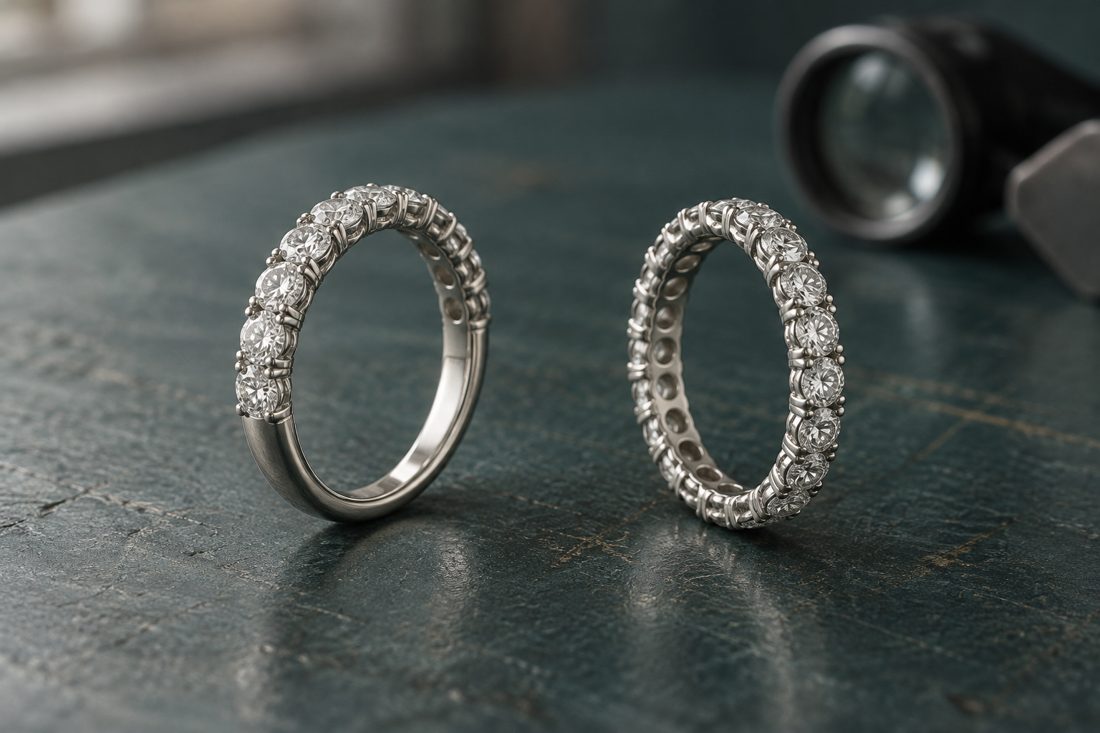
Choose the coverage you will enjoy wearing—not simply the most stones. A full-eternity ring keeps its decorated face in view as it turns. A half or three-quarter design leaves a plain section, but any future sizing work still depends on the exact construction.
At a glance
Three ways to wear a line of stones
Schematic coverage, not a setting diagram or a promise that a particular ring can be resized.
| Coverage | What you gain | What to check |
|---|---|---|
| Full | A continuous stone-set appearance as the ring turns. | Resizing may be difficult or impossible; underside settings receive everyday knocks. |
| Three-quarter | Generous coverage with some plain metal underneath. | How much plain shank remains in your size, and what alteration the maker permits. |
| Half | Fewer stones on the high-contact underside; a plain lower shank. | The plain section can show if the ring rotates. Adjustment still depends on the design. |
The setting changes the feel
Coverage is only one decision. A low channel-set band can feel very different from a tall shared-claw design. Compare width, setting height and the edges between neighbouring fingers.
Ask a jeweller to assess the actual stack: exposed stones or setting edges may rub against an engagement-ring basket or another band. Our profile guide explains the shape questions to ask.
A four-step trying-on routine
- Start alone. Try the eternity ring by itself, then add the rings you intend to wear with it.
- Move naturally. Close your hand gently, bring adjacent fingers together and hold a pen.
- Check the contact points. Look between settings as well as from above; ask about rubbing, pressure or a gap.
- Get the sizing answer before ordering. Confirm resizing, remake or exchange options for that exact ring.
Do not force a tight ring or use a thick stack to compensate for an incorrectly fitted ring. Read the sizing guide and resizing guide before treating an alteration as a future certainty.
Compare the ring you will actually receive
A headline carat figure needs context. GIA distinguishes an individual diamond’s weight from total carat weight across a multi-stone ring. A 1.00 ct total band does not contain a 1.00 ct diamond in every setting.
Width & height
Record both measurements and try the complete stack. Width across the finger and setting height answer different questions.
Compare the specification for your actual ring size.
Metal & stones
Confirm metal and fineness, stone identity and origin, coverage, stone count and accompanying paperwork.
A bigger total carat weight alone does not establish better construction.
Fit & aftercare
Ask about exchange, inspections, repairs and replacement stones. Keep the written answers with your ring records.
Check which services are included and which cost extra.
Ask whether stone count or quoted total weight changes between sizes. More stones and setting work can affect the price, but maintenance belongs in the budget too. Our wedding-ring cost guide helps separate confirmed costs from unknowns.
Prefer more visible metal?
The Selena Gomez Sixteen Stone feature explores a band whose repeated metal motifs matter as much as its stones. Compare the visual idea, then apply the same fit and specification checks.
Sources & scope
Tiffany’s eternity-ring guidance explains full and half coverage; GIA explains individual and total carat weight. The comparison and buying checklist are editorial guidance, not an assessment of a particular ring. An eternity ring can be a wedding band or an anniversary choice: choose around how you will wear it, and ask the maker about the actual design.