Rings & Jewellery
Eternity Rings Explained: Full, Half and Three-Quarter Bands
·The Wedding Ring Blog Editorial Team
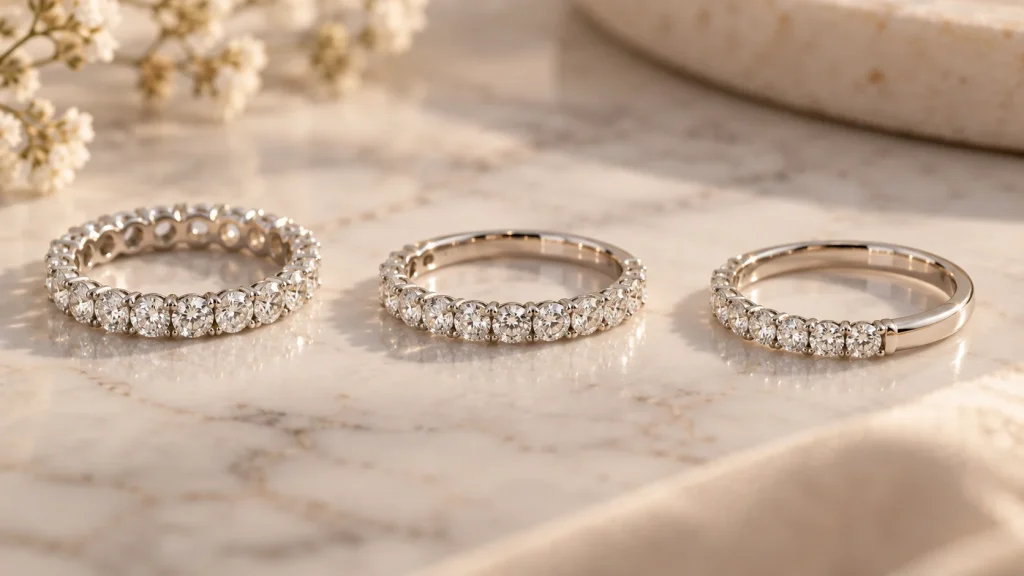
An eternity ring is defined by a repeating line of gemstones around some or all of the band. The practical difference between full, three-quarter and half eternity is not just how much sparkle is visible. It affects sizing, comfort, repair, cost and how forgiving the ring is when your finger size changes.
Visual guide
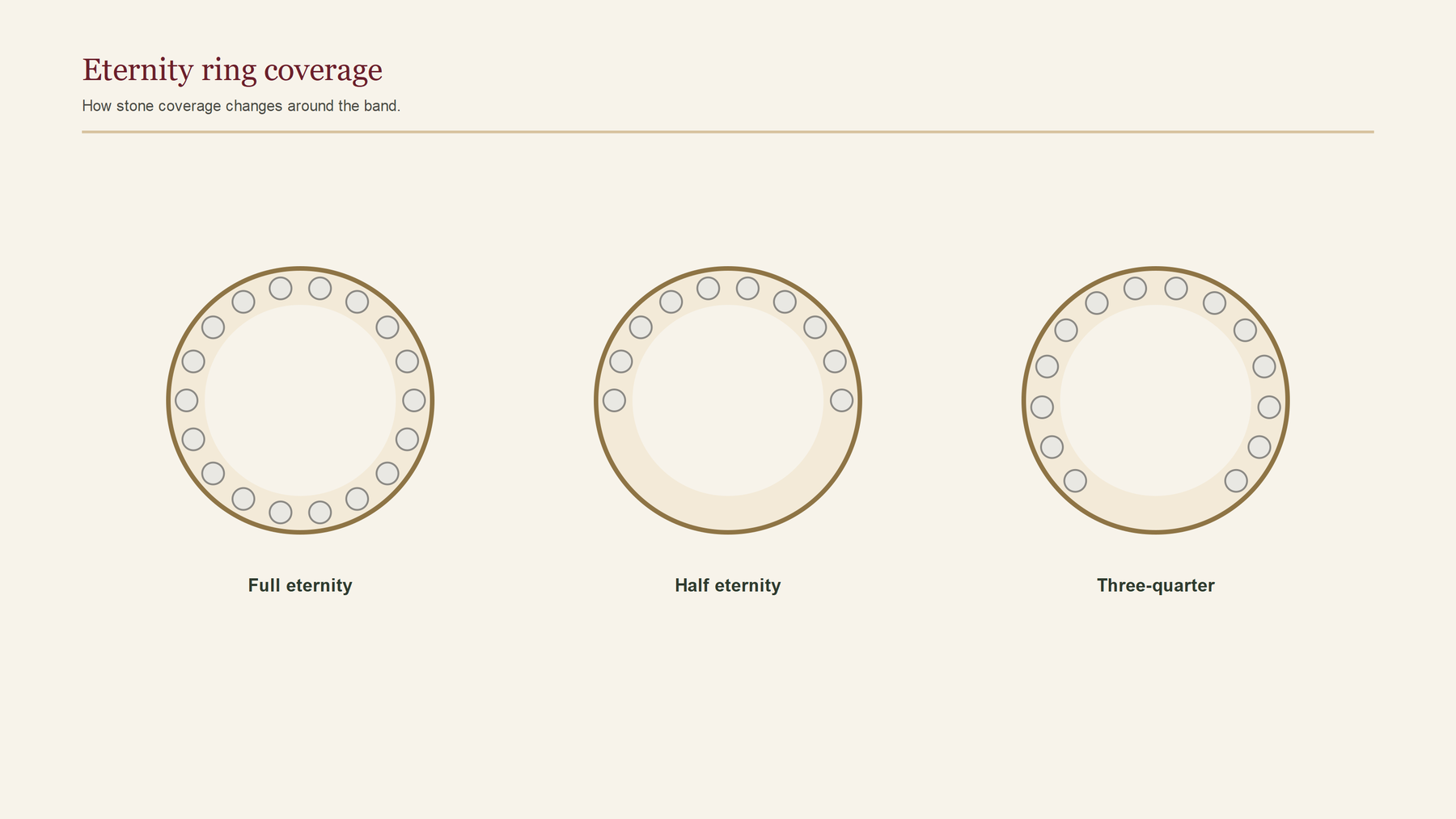
Full, three-quarter and half eternity coverage
Full eternity
Stones continue all the way around the finger. The visual advantage is consistency: there is no plain section to rotate into view. The practical disadvantage is that resizing can be difficult or impossible depending on the setting and design. Stones on the underside of the finger also receive more knocks.
Three-quarter eternity
Most of the circumference is set, leaving a modest plain section underneath. It gives generous coverage while preserving more metal for possible adjustment or future work. Exact resizing options still depend on construction.
Half eternity
Stones cover roughly the visible upper portion of the ring. The plain lower shank can make sizing and repairs easier, and there are fewer stones in the high-contact underside area. If the ring rotates substantially, the plain section may become visible.
Coverage is only one decision
Also compare stone size, total ring depth, setting style and edge shape. A low channel-set band behaves very differently beside an engagement ring from a tall shared-prong eternity ring.
How it sits with other rings
Check whether exposed diamonds or setting edges rub against an engagement-ring basket or another band. Mixed metals and hard stone edges can wear adjacent surfaces over time. A jeweller can assess the actual stack rather than relying on a top-down photograph.
Sizing matters before purchase
Full-eternity rings deserve especially careful sizing because the normal “we can resize it later” assumption may not apply. If your size is uncertain, ask about the maker’s remake or exchange policy before ordering.
Anniversary ring or wedding band?
Either can work. There is no rule that an eternity ring must be bought after marriage. The question is whether the ring’s stone coverage, durability and maintenance suit how you plan to wear it.
Compare setting styles, not only coverage
Shared claws can maximise visible stone but leave more exposed edges. Channel settings place stones between metal walls and often produce a smoother outline, while bezel and scalloped settings create different balances between protection, light and metal. Ask to handle the actual construction: two half-eternity rings with the same stone count can feel completely different between neighbouring fingers.
Budget for the whole ownership cycle
More stones and more setting work usually increase the purchase price, but maintenance matters too. Small stones can loosen, claws can wear and a lost matched stone may need careful replacement. Ask how often the jeweller recommends inspections, whether routine checks are included and how repairs are priced. Keep the grading or sales paperwork and clear photographs with your other ring records.
Try the complete stack
Wear the eternity ring beside the engagement ring and wedding band for several minutes. Check total width, height between the fingers and whether exposed stone edges touch another ring. A shaped or spacer band can sometimes prevent rubbing, but it also changes the width and appearance of the stack. Our guides to wedding-ring profiles and when to buy wedding rings can help with the wider decision.
A useful final checklist
- Confirm the exact proportion of the band that is stone-set.
- Ask what resizing, remake or exchange options exist.
- Check the setting from the side, not only from above.
- Understand inspection and repair arrangements.
- Choose for daily comfort rather than maximum stone coverage alone.
Compare the specification for your actual ring size
A headline carat figure needs context. GIA distinguishes the weight of an individual diamond from total carat weight across a multi-stone ring. A band described as 1.00 ct total is not a band in which each diamond weighs 1.00 ct.
Ask how many stones are included in your size, their approximate individual dimensions, and whether the quoted total changes between sizes. Compare the metal and fineness, diamond origin, stated quality range, coverage and setting together. A bigger total alone does not establish a better-made ring.
- Coverage
- Record full, half or three-quarter, then check the photographs and stone count. Descriptive labels should not replace the exact product specification.
- Width and height
- Ask for both measurements. The width across the finger and height of the setting answer different comfort and pairing questions.
- Stone description
- Confirm diamond versus another gemstone or simulant, natural versus laboratory-grown where relevant, and what paperwork accompanies the purchase.
- Size and aftercare
- Obtain the maker’s answer about resizing, exchange, inspections and replacement stones for the exact design.
A short trying-on routine
- Try the ring alone, then beside the rings you intend to wear with it.
- Close your hand gently, bring adjacent fingers together and hold a pen.
- Check where the settings touch the neighbouring ring, not just whether the stack looks straight from above.
- Ask the jeweller to explain any contact point, pressure or fit concern before ordering.
Do not force a tight ring or use a thick stack to compensate for an incorrectly fitted ring. The sizing guide and resizing guide cover the broader checks.
Compare current shopping options
These searches are starting points, not a vetted product shortlist. Results may mix precious-metal jewellery with plated rings and diamond alternatives. Read the exact material and stone description, dimensions, condition and return terms before comparing prices.
Affiliate links: we may earn a commission from qualifying purchases through these links, at no extra cost to you.
- Compare half-eternity diamond ring listings on eBay UK
- Browse half-eternity ring designs on Amazon UK
For pre-owned listings, work through our second-hand ring checklist. Neither a search label nor a marketplace photograph authenticates a ring.
Sources and scope
Tiffany’s eternity-ring guidance explains full and half coverage; GIA explains individual and total diamond weight. Our comparison worksheet is editorial buying guidance. Ask the maker or a jeweller about the specific ring rather than assuming all designs have the same alteration options.