The Wedding Ring Blog
Wedding Suit Guide: Dress Codes, Fabrics, Fit and Wedding Party Style
Wedding suits are easier to choose once you separate three decisions that are often muddled together: the formality of the day, the setting and season, and how coordinated the wedding party actually needs to look. This guide is designed as a practical starting point rather than a set of rigid rules.
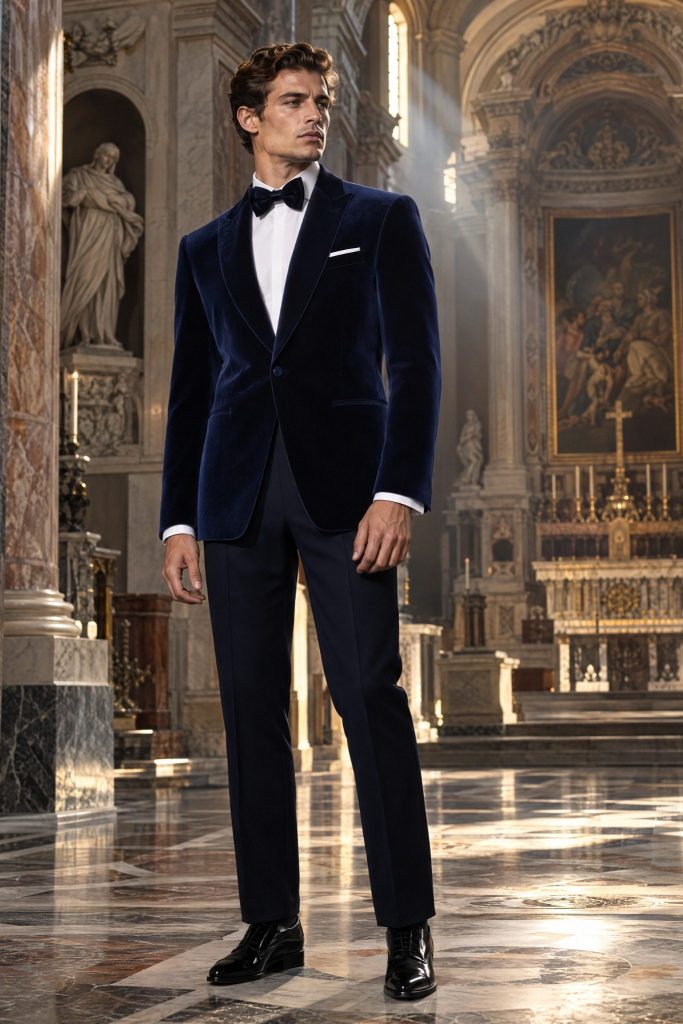
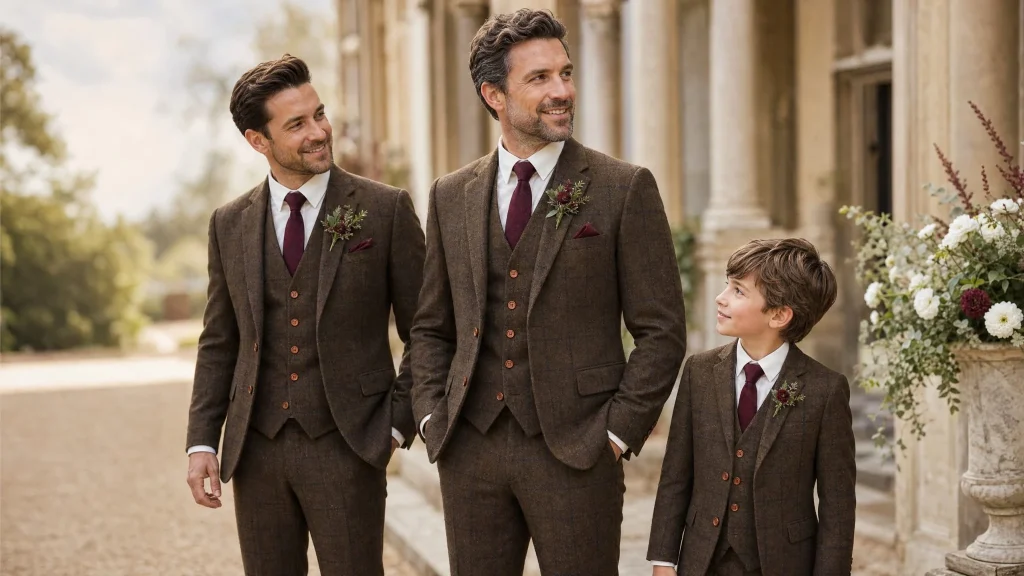
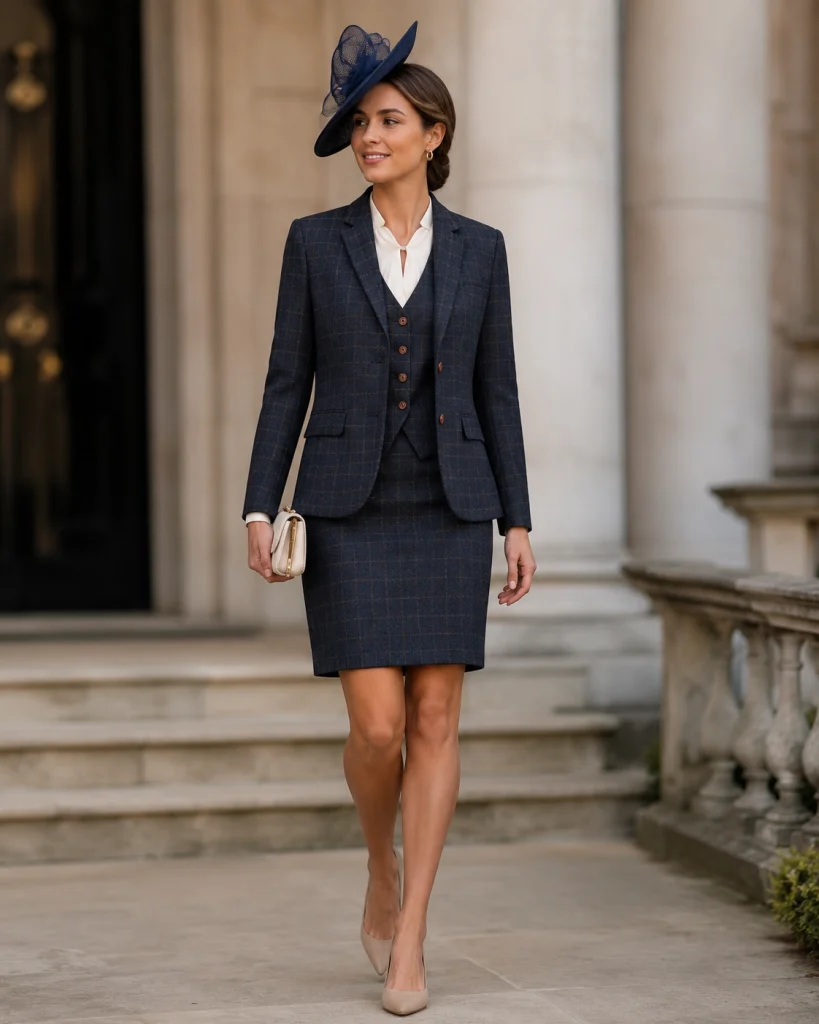
Start with the dress code, not the colour
The invitation wording and venue usually tell you more than a Pinterest board does. Black tie, formal, semi-formal and relaxed country weddings all create different expectations. The mistake is to choose a fabric or colour first and then try to force it into a dress code that does not suit the event.
For evening black tie, a dinner suit or tuxedo remains the clearest choice. A dark lounge suit can work for many formal weddings, but it is not the same thing as black tie. For a deeper explanation, see Black Tie Wedding Style: What the Groom and Groomsmen Should Know.
Country-house, barn and autumn weddings
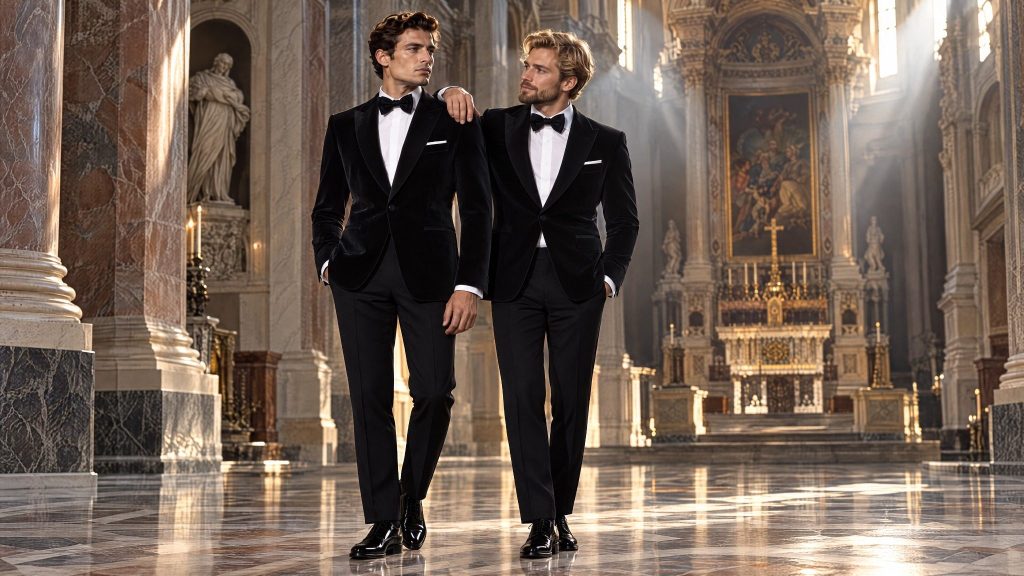
Textured cloth becomes especially useful when the setting is less metropolitan and more rural. Tweed, herringbone, subtle checks and warmer earth tones can look intentional in country houses, barns, estates and autumn landscapes without becoming costume-like.
The key is restraint. A patterned suit already contributes visual interest, so accessories usually work better when they are simpler. For more on colour, texture and coordination, read Tweed Wedding Suits for Country and Autumn Weddings.
What semi-formal actually means
“Semi-formal” is one of the least precise phrases in wedding planning. In practice it normally means smarter than everyday businesswear, but less prescribed than black tie. A well-cut two- or three-piece suit is usually a safe foundation, with the venue, time of day and season determining how dark, textured or traditional it should be.
Our separate guide, What Semi-Formal Really Means for a 2026 Wedding, breaks down the grey area in more detail.
Two-piece or three-piece?
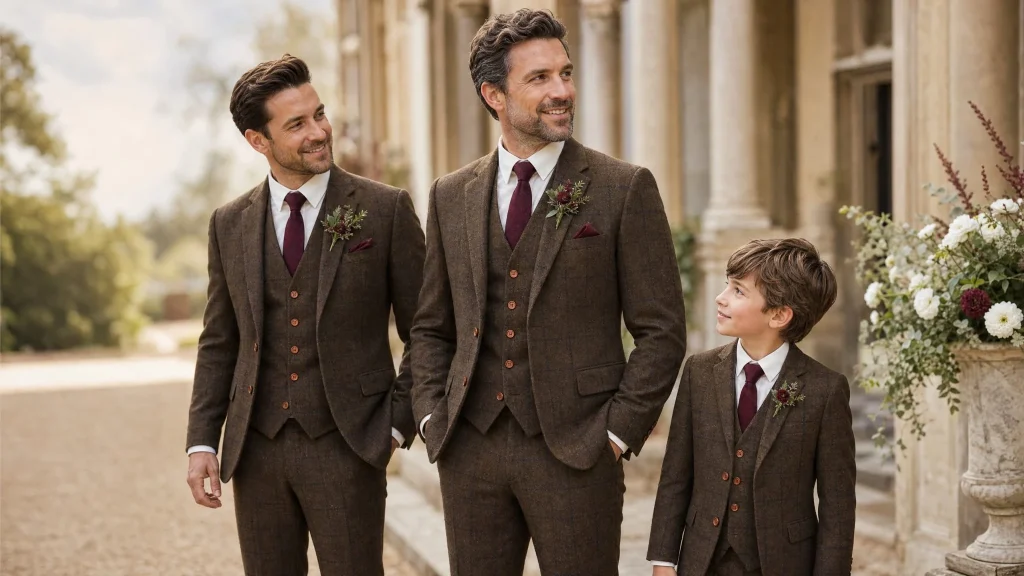
A three-piece suit gives the groom more visual distinction without requiring a completely different colour from the rest of the party. It also means the waistcoat keeps the outfit looking finished after the jacket comes off later in the day. A two-piece suit is simpler and often better for very warm weather or a deliberately relaxed wedding.
There is no requirement for every groomsman to wear the same combination. One practical approach is to keep cloth and trousers consistent while giving the groom a waistcoat, different tie, boutonnière or other small point of difference.
How closely should the wedding party match?
Exact matching is only one option. A wedding party can look coordinated through a shared cloth, colour family, waistcoat, tie or accessory without every person appearing in an identical uniform. This is particularly useful when body shapes, age ranges and personal preferences differ.
For photographs, consistency in formality usually matters more than absolute sameness. One person in a dinner suit beside another in a very casual blazer is visually more jarring than several suits in slightly different shades of navy or brown.
Season and fabric weight
Summer weddings generally favour lighter-weight cloths and simpler layering. Autumn and winter make heavier textures, three-piece suits and deeper colours easier to wear. Spring sits between the two and works particularly well with mid-weight navy, grey, blue, tan and softer checks.
Do not choose purely by season, though. A heated country house in December and an exposed outdoor ceremony in September create very different practical requirements.
Fit matters more than fashion language
Whether a suit is described as slim, regular, tailored or relaxed is less important than whether the shoulders, chest, waist, trouser rise and length work together on the wearer. Wedding photographs are unforgiving of jackets that pull across the button, trousers that puddle excessively or sleeves that are obviously too long.
Order early enough to check the complete outfit, including shoes and shirt, rather than trying individual pieces in isolation a few days before the wedding.
Choosing colour
Navy and charcoal are versatile because they work across a wide range of venues and seasons. Mid-blue and lighter neutrals feel less formal. Browns, greens and textured earth tones are particularly effective for country weddings. Black is strongest when the dress code genuinely supports it rather than simply because it feels “formal”.
If the wedding has a strong palette, it is usually better to echo that palette in accessories, flowers or a subtle overcheck than to match the entire suit exactly to bridesmaid dresses or decor.
Wedding suits for women
A tailored trouser suit or skirt suit can be a wedding outfit in its own right rather than a substitute for a dress. The same principles still apply: establish the level of formality, choose cloth appropriate to the venue and season, and prioritise fit over trend-led details. For wedding parties, consistency can come from shared cloth or colour rather than identical garment combinations.
When should you order?
Leave enough time for measuring, production or alterations, delivery, and a final full-outfit check. The more people involved in the wedding party, the more valuable that buffer becomes. Shoes, shirts, ties and accessories should be tested with the suit rather than bought independently at the last moment.
Weddingwear resources
The Wedding Ring Blog has commercial relationships with two specialist weddingwear businesses. Luxedo Suits focuses on formal and black-tie weddingwear, while That British Tweed Company specialises in tweed and country wedding tailoring. These links are included as disclosed commercial resources rather than as a substitute for the independent guidance above.
Final checklist
- Confirm the dress code and venue before choosing cloth.
- Decide whether the groom needs to stand out from the wedding party.
- Choose fabric weight for the real conditions, not just the calendar.
- Prioritise fit through the shoulders, chest, waist and trouser length.
- Test the complete outfit together well before the wedding.
- Keep accessories simpler when the suit itself has strong texture or pattern.