Wedding Style
Wedding Suit Fabrics Explained: Wool, Tweed, Linen and Blends
·The Wedding Ring Blog Editorial Team
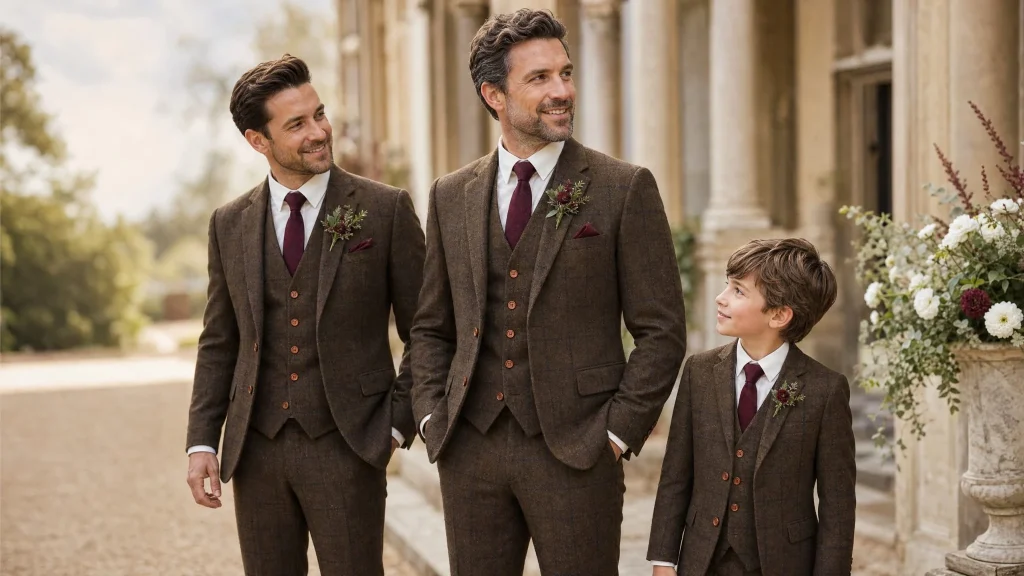
Fabric changes more than temperature. It affects how a wedding suit hangs, how formal it feels, how much texture appears in photographs and whether the outfit belongs naturally in the venue.
Wool: the versatile starting point
Wool covers an enormous range of weights and finishes, which is why it works for so many formal and semi-formal weddings. A smooth dark cloth reads differently from a textured country-weight fabric even when both are technically wool.
Tweed: texture and place
Tweed brings visible structure and character. It is particularly convincing in country settings and cooler seasons, but it works best when chosen as tailoring rather than as a costume shorthand for “rustic”.
Linen: relaxed and visibly seasonal
Linen is valued for warm-weather character and its relaxed surface. Creasing is part of the material’s appearance rather than a defect, which makes it better suited to weddings where a softer level of formality is intentional.
Blends: useful when they solve a problem
Blended cloths can be practical when they combine drape, texture, resilience or seasonal comfort. Judge the finished cloth rather than assuming a blend is automatically better or worse.
Match fabric to formality
Black tie, a formal city ceremony, a country house and a summer destination wedding do not ask the same thing from a suit. Let the event narrow the fabric choices before colour and accessories take over.
Think about the whole wedding party
Coordination does not require identical cloth. Repeating colour families, texture or level of formality can create a coherent group while allowing the groom to remain distinct.