Wedding Style
How to Coordinate Groomsmen Without Making Everyone Look Identical
·The Wedding Ring Blog Editorial Team
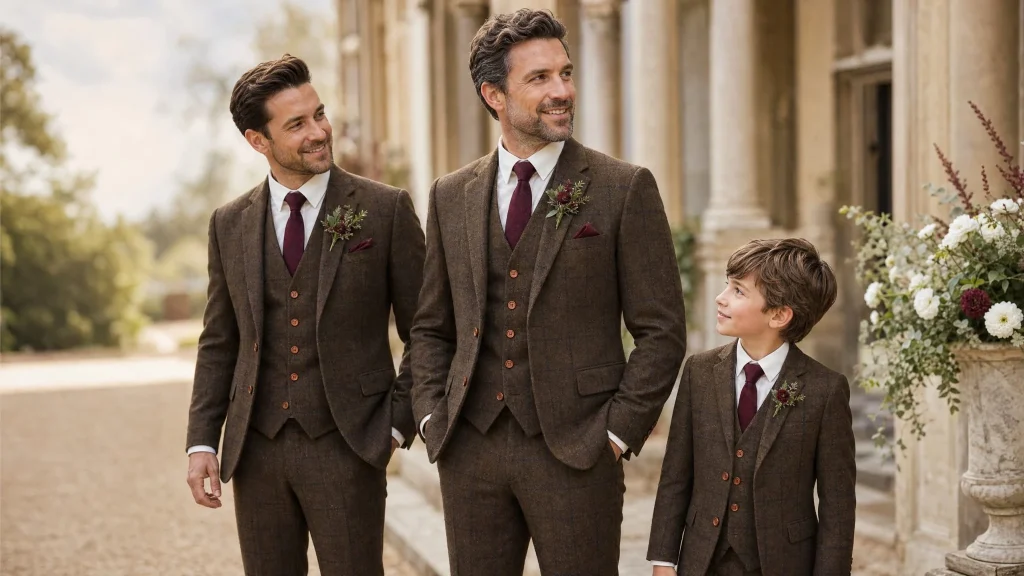
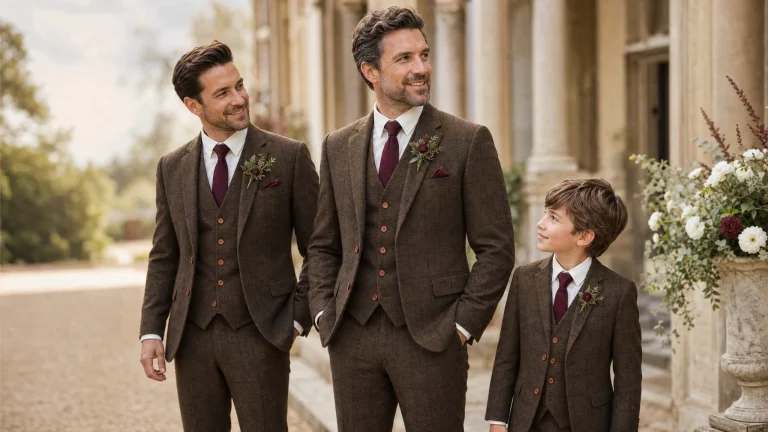
A coordinated wedding party does not require cloned suits. In fact, small differences in body shape, age and personal style often make an identical outfit look less coherent than a properly controlled set of variations.
Match the level of formality first
The most important shared signal is whether everyone looks appropriate to the same event. A dinner suit beside a casual separates outfit will look disconnected even if both are black.
Choose one or two elements to repeat
Colour family, cloth texture, waistcoat, tie or boutonnière can provide enough repetition. Trying to match every component often makes the group feel more like a uniform.
Let the groom be distinct on purpose
The groom can differ through cloth, waistcoat, lapel treatment, tie, buttonhole or a controlled colour shift while remaining clearly part of the same visual system.
Account for different bodies
A flattering cut is more valuable than forcing every person into the same nominal fit. Keep the design language consistent while allowing sensible adjustments in size and proportion.
Put the outfits side by side before the wedding if possible. Ask whether they look related at a glance, not whether every item matches on a spreadsheet.
Tweed, checks and textured waistcoats can work particularly well when repeated selectively rather than used head-to-toe on every member of the wedding party.
Build a hierarchy instead of a uniform
A useful wedding-party hierarchy might keep everyone in the same broad formality while allowing the groom a distinct cloth or waistcoat, the best man a small accessory difference and the remaining groomsmen a shared base outfit. The eye reads the group as coherent without losing the groom.
Use colour families rather than exact shades
Trying to match navy, green or brown across different manufacturers often produces near-matches that look accidental. A controlled family of related colours can be more convincing, especially when the cloth textures are intentionally different.
Texture is an easy way to coordinate
Tweed, flannel, worsted wool and linen each create a different visual surface. Repeating one texture in waistcoats, jackets or accessories can connect the group without requiring identical suits.
Check the proportions together
Very different lapel widths, tie widths or trouser silhouettes can make a group look less coordinated even when the colours match. Keep the overall tailoring language similar and allow variation in the details.
What if someone already owns a suitable suit?
Using existing tailoring can work well. Match the dress-code level, then bring the look together with shirts, ties, flowers or waistcoats. It is often better than forcing someone into a poorer-fitting hired or purchased suit purely for uniformity.
For the broader decisions, start with the Wedding Suit Guide. Country and autumn weddings may also benefit from the Tweed Wedding Suits guide.
Wedding-party checklist
- Photograph swatches together in daylight.
- Define who supplies shirts, ties, shoes and alterations.
- Check the complete group at least several weeks before the wedding.
Continue with the Wedding Suit Guide, dress-code guide and country and autumn tailoring guide.
Three outfit briefs you can adapt
These are styling examples, not compulsory dress codes or claims that one combination suits every venue.
- Existing navy suits
- Let each person wear a well-fitting navy suit, agree white shirts and a shared tie colour, then allow appropriate shoes they already own. View the actual suits together: a visibly different blue may be better treated as deliberate contrast than a failed exact match.
- Country wedding with texture
- Keep the shirt and trouser direction consistent, then repeat a tweed waistcoat or a restrained accessory colour. Give the groom one clear point of difference instead of adding several competing patterns.
- Formal evening wedding
- Confirm black tie before shopping. Coordinate the essential dress-code elements first; let differences in fit reflect the wearer rather than forcing the same jacket shape onto everyone.
Send a short brief before anybody buys
- Required: dress-code level, agreed suit or colour family, shirt and shared accessory.
- Flexible: acceptable fit, shoes and individual details.
- Budget: who pays, the agreed limit and whether alterations are included.
- Ownership: what can be reused, what is hired and what must be returned.
- Deadlines: ordering, fitting, collection and one complete-outfit check.
Ask privately about budget, fit and comfort concerns before committing the group to a purchase. If an exact shared item is important, confirm enough stock in the required sizes; do not assume a matching listing will still be available later.
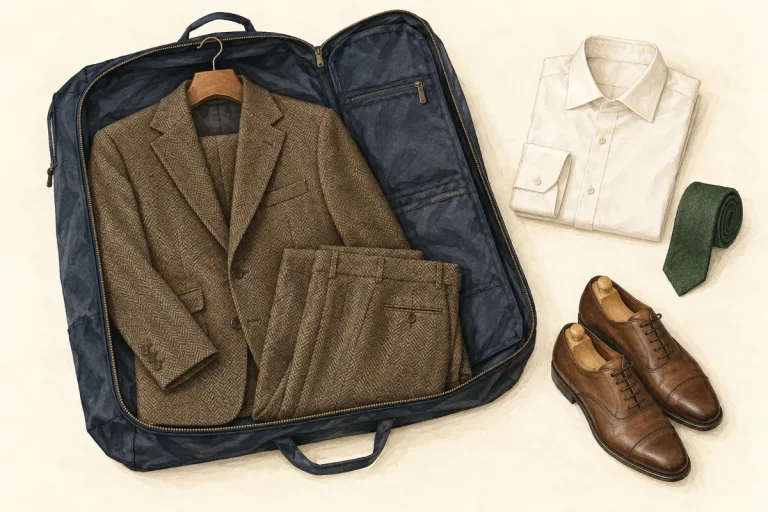
For people travelling separately, share the wedding suit packing checklist. A coordinated outfit only works if the shirt, tie and shoes arrive with it.