Rings & Jewellery
Mixed-Metal Wedding Rings: How to Combine Gold, Platinum and Different Colours
·The Wedding Ring Blog Editorial Team
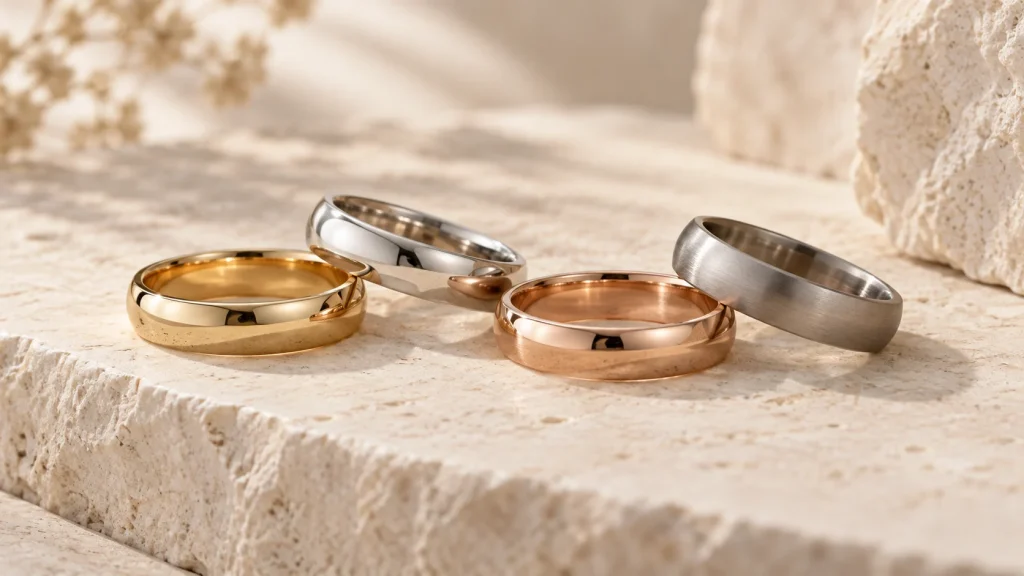
Wedding jewellery no longer has to use one metal colour from engagement ring to wedding band and beyond. Mixed-metal combinations can look deliberate and sophisticated when the contrast is treated as part of the design rather than an accident.
Start with colour, not a rule about matching
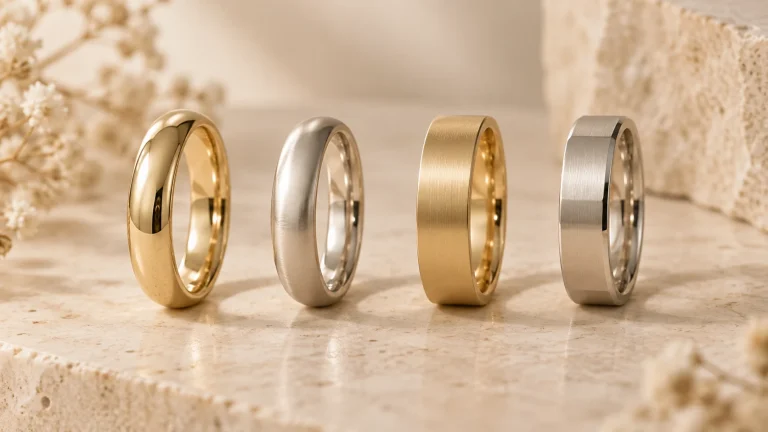
Yellow gold beside a white metal creates a clear contrast; rose gold introduces warmth; two white metals can appear almost continuous. Decide whether the aim is harmony or visible separation.
Consider how the rings physically meet
Different metals can have different wear characteristics. If two rings rub against one another every day, ask a jeweller whether the combination and construction are sensible for long-term contact.
Use repetition to make the mix look intentional
A mixed-metal stack often feels more coherent when one colour appears elsewhere — in an edge, setting, watch, cufflink or another piece of jewellery — rather than appearing once without context.
Do not let matching override the better ring
A wedding ring should still work in its own right. Comfort, width, profile and maintenance matter more than satisfying a rule that every item must share the same metal.
Three ways to make a mixed-metal pairing feel considered
Keep one ring quiet. A polished yellow-gold engagement ring beside a simple platinum band gives the contrast room to read clearly. If both rings have prominent stones, edges or surface detail, try them together before adding another visual feature.
Repeat a colour once. If the wedding band introduces rose gold, a small rose-gold detail elsewhere in the stack can make the choice feel deliberate. Repetition is a design option, not a rule: one clear contrast can be enough.
Use finish as the bridge. Two rings in different metals can still feel related when their profiles or finishes share a quality. A brushed band beside a high-polish setting, for example, separates the surfaces while keeping the overall combination restrained. See our guide to wedding-ring finishes.
Try the pair from the side as well as above
Bring the engagement ring to the fitting and check the combination on your hand, in daylight and under indoor light. Look for a gap you like, a profile that sits comfortably and any point where the rings press or rub. A deliberate gap can be attractive; a shaped band may be worth considering if you want the rings to sit closer. Our guide to matching a wedding band to an engagement ring explains the fit choices.
Before ordering, ask the jeweller how the exact pair can be cleaned, refinished and resized, and whether routine contact between these two designs needs any particular care. The goal is not to make unlike metals behave identically; it is to choose a combination whose appearance, comfort and aftercare make sense for you.
Do a couple’s wedding rings have to match?
You can choose different-looking rings and still treat the purchase as a shared decision. Matching is a personal preference, not the only way to make a pair feel connected. One person might want a narrow yellow-gold band while the other prefers a wider white-metal ring. Start with what each person enjoys wearing before agreeing on any common detail.
There is also an important distinction between two people wearing different metals and two rings worn together on one finger. Rings on different people’s hands do not rub against each other. For a stack, the actual contact points and construction need checking. Do not apply a stacking warning to a couple’s separate bands simply because their colours differ.
Choose what you want to share
- A finish: both rings could have a softly brushed surface without being the same colour or width.
- A shape: similar rounded profiles can create a visual relationship while allowing different sizes.
- An engraving: complementary words or the same date can be a private connection rather than an exterior match. Confirm the available space and final wording with the maker.
- Nothing visible: choosing each other’s favourite designs together can be enough. You do not need to buy a matching set to explain the choice.
A simple two-person shortlist
Make a separate shortlist for each wearer: preferred colour, comfortable width, profile, finish and a spending limit. Try rings independently, then look at the choices together. If one person keeps compromising on comfort to preserve the pair’s appearance, revisit the design rather than assuming the discomfort will disappear.
Compare both quotations line by line. A matching set may have unequal specifications, and a pair price does not show how the budget is divided. Ask for the metal description, dimensions, stone details where relevant and any engraving or alteration charges for each ring. Our cost guide gives you a framework for comparing current shopping options without treating unlike rings as the same product.
Agree on a total budget, but do not assume it must be split equally. A useful outcome is two rings each person wants to wear, with the combined cost and aftercare understood. Use the sizing guide for each wearer’s fit checks before ordering.