Rings & Jewellery
How to Match a Wedding Band to an Engagement Ring
·The Wedding Ring Blog Editorial Team
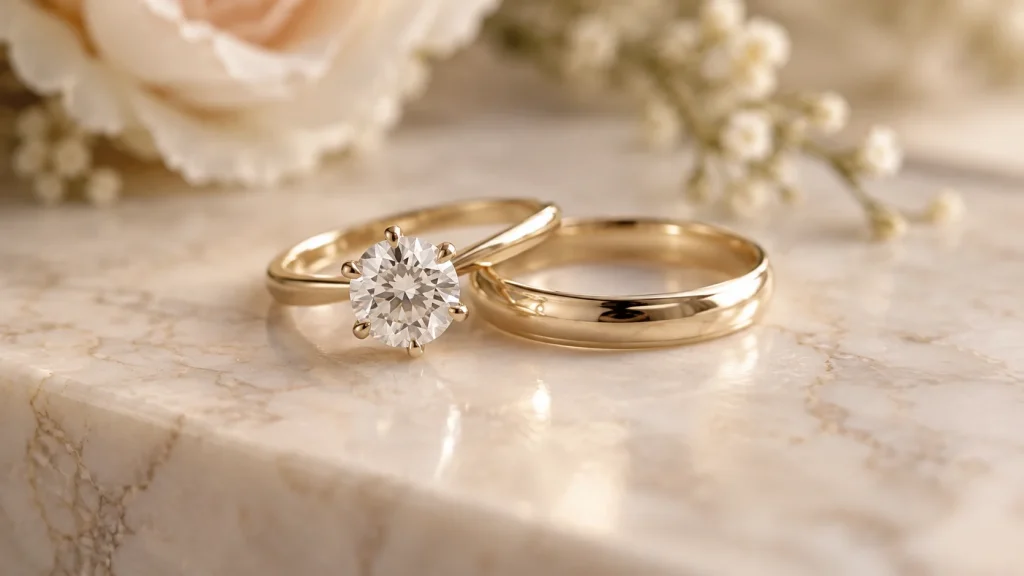
A wedding band does not have to look identical to an engagement ring. It does have to coexist with it physically. The most important questions are setting clearance, total width, contact points and whether you actually like a flush fit or a deliberate gap.
Start with the engagement ring’s side profile
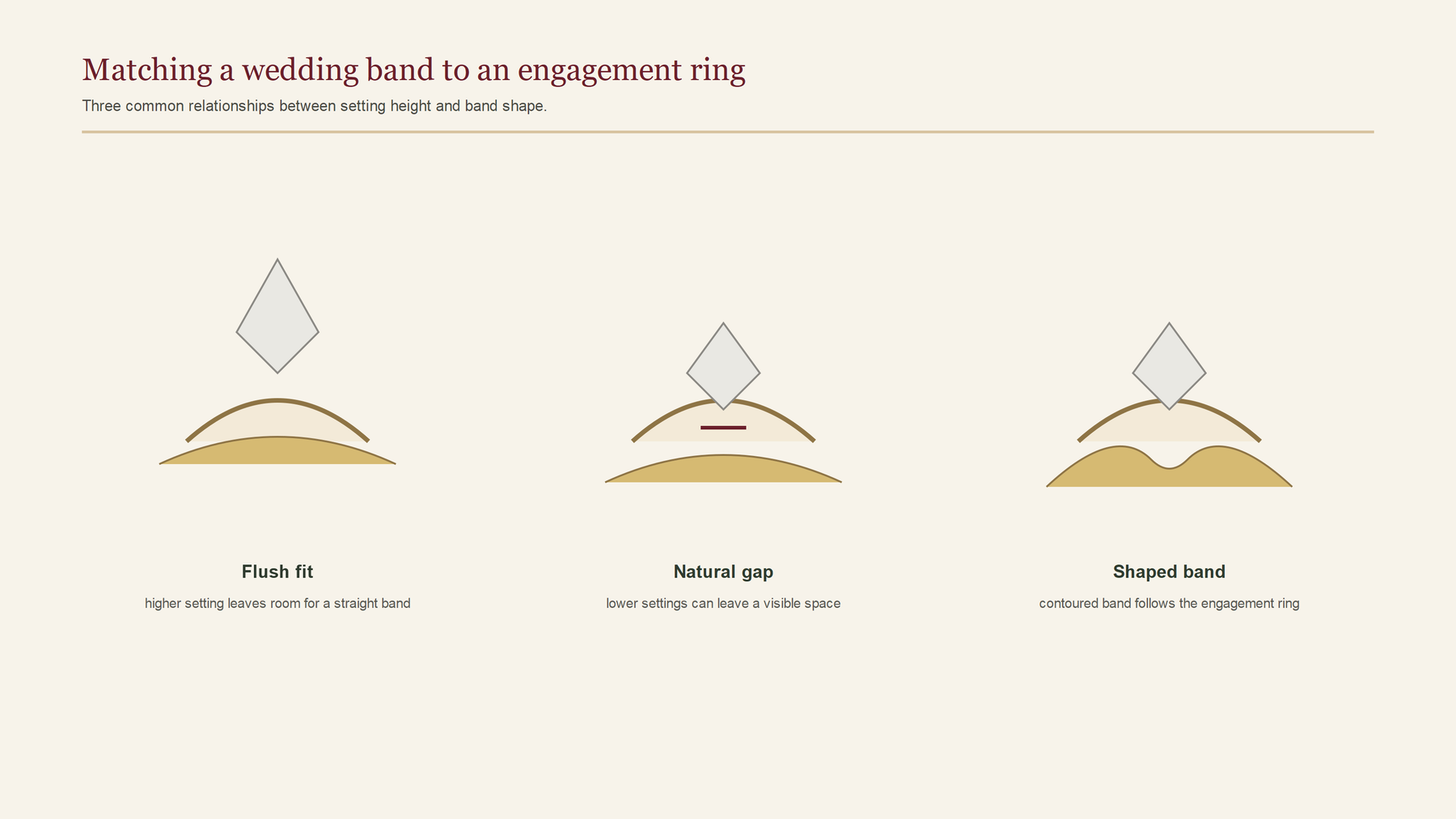
Look underneath the centre stone. A high-set solitaire often leaves room for a straight band. A low basket, wide halo, projecting claws or broad shoulders may prevent a straight wedding ring from moving close enough to sit flush.
A gap is not automatically a problem
Many people prefer the visual separation of two distinct rings. If the gap is intentional and the rings are comfortable, there is no rule requiring a perfectly flush stack.
When to choose a curved or contoured band
A shaped band follows the outline of the engagement ring. It can create a close visual fit around a low setting, but it is less versatile when worn alone. Try the shaped band both with and without the engagement ring before ordering.
Custom-fitted bands
Vintage, asymmetrical or unusually shaped engagement rings sometimes need a custom wedding band. A jeweller can design the curve around the existing setting and control where the rings touch.
Match height as well as width
A very deep wedding band beside a fine engagement-ring shank can create an abrupt step. A band that is too tall can also rub against a basket or claws. Ask for the depth measurement of both rings.
Metal combinations and wear
Mixed metals can look excellent, but rings that rub together can wear at the contact points. GIA notes that softer metals such as gold can wear more quickly when stacked directly against harder metals such as platinum. If the surfaces collide, a small gap or buffer ring may be worth discussing.
Diamond-set wedding bands
Check whether exposed diamond edges or settings will contact the engagement ring. Diamonds are extremely hard and can abrade metal. Shared-prong and pavé edges need particular attention when another ring sits tightly beside them.
Try the stack in motion
- Make a fist.
- Rotate the rings naturally.
- Check whether one rides over the other.
- Look from the side, not just the top.
- Check the space remaining below the knuckle.
Design choices
For a classic look: match metal and keep the band quieter than the engagement ring.
For contrast: use a different metal, texture or diamond pattern while keeping scale balanced.
For a designed stack: consider how a future eternity ring might fit before making the wedding band unusually wide.
Also read the width guide and eternity-ring guide.
Source
GIA, Ring Stacking Guide: https://4cs.gia.edu/en-us/blog/guide-on-how-to-stack-rings/