Rings & Jewellery
Platinum vs White Gold Wedding Rings: Which Is Better for Everyday Wear?
·The Wedding Ring Blog Editorial Team
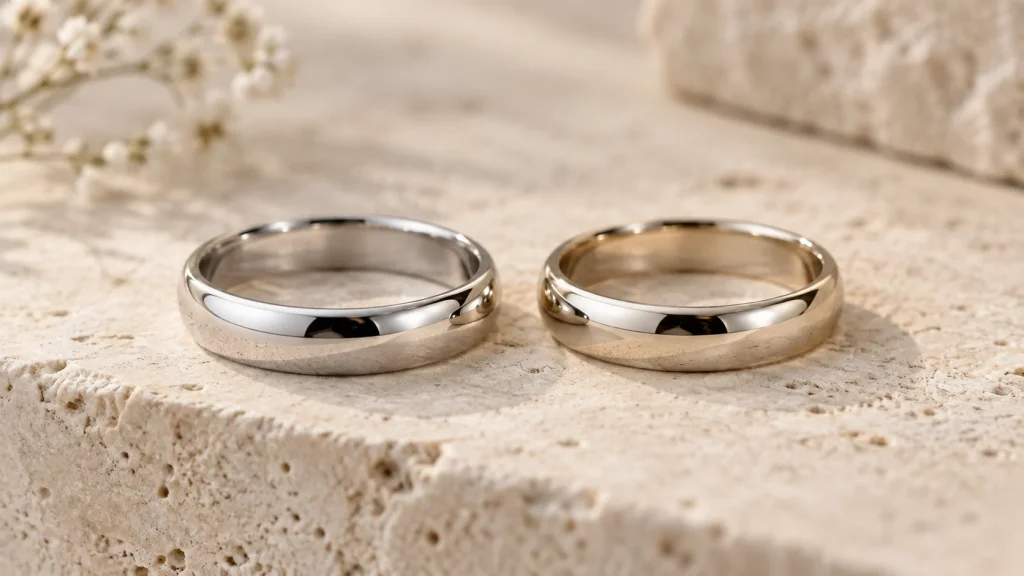
Platinum and white gold can look similar in a jewellery cabinet, but they are not interchangeable materials. Platinum is naturally white and dense. White gold is a gold alloy that is often rhodium plated to give it a bright white surface. The difference affects weight, maintenance, wear, cost and sometimes skin sensitivity.
Neither metal is universally better. The useful question is which set of characteristics suits your ring and your expectations.
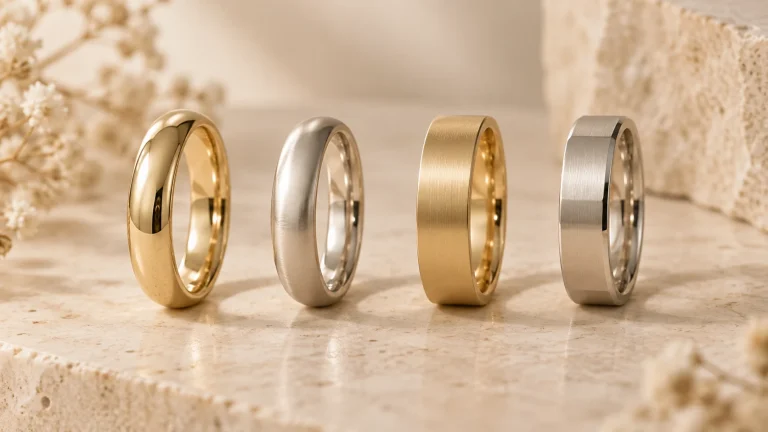
Visual guide
Precious-metal colour is only part of the decision
Platinum vs white gold at a glance
| Question | Platinum | White gold |
|---|---|---|
| Natural colour | Naturally white | White-toned alloy; often rhodium plated |
| Weight | Dense and noticeably heavy | Lighter than a comparable platinum band |
| Surface wear | Scratches and develops patina | Scratches; plated surface may wear and reveal the alloy colour below |
| Routine refinishing | Can be polished/refinished if desired | May be polished and replated where rhodium plating is used |
| Resizing | Often possible on plain bands; specialist work may cost more | Often possible on plain bands; plating may need restoration afterward |
| Alloy questions | Jewellery is commonly high-purity platinum alloy | Alloy system varies; ask exactly what metals are used |
The biggest difference you will feel is weight
Platinum’s density gives a broad wedding band a substantial feel. Try two rings in the same width and profile side by side. If the extra weight feels reassuring, platinum may appeal immediately. If you prefer jewellery that almost disappears on the hand, white gold may feel easier.
Platinum patina is not a plating failure
Platinum develops fine marks through wear that combine into a softer surface patina. Some owners like this because the ring looks lived-in. Others have the ring professionally refinished. The underlying metal remains white.
White gold maintenance depends on the actual ring
White gold is not a single fixed recipe. Different alloys have different base colours. Many rings are rhodium plated for a bright, neutral white finish. Over time, the plating can wear most visibly on high-contact areas. How often anyone chooses to replate depends on the ring, wear and personal preference; a universal “every X years” schedule is not credible.
Which is better beside a diamond engagement ring?
Both can work beautifully. A better question is whether the wedding band and engagement ring will physically rub against each other. Stacked rings can wear where they contact, and differences in hardness can influence that wear. Check the side profile and consider a small gap or buffer band if the settings collide.
Sensitive skin
Platinum is commonly chosen by people trying to avoid certain alloying metals because platinum jewellery is typically high-purity. White-gold alloy systems vary, and some can contain nickel. If you know you react to jewellery, ask the jeweller for the actual alloy composition rather than relying on the colour name.
Which should you choose?
Choose platinum if:
- you like a substantial, heavy ring;
- you want a naturally white precious metal;
- you are comfortable with patina or occasional professional refinishing;
- the higher initial cost fits the budget.
Choose white gold if:
- you want a lighter white precious-metal ring;
- you are comfortable asking how the alloy and rhodium plating are maintained;
- matching an existing white-gold engagement ring matters to you;
- the price/design combination works better for your chosen ring.
Also compare all wedding-ring metals and the sensitive-skin guide.
Sources
- GIA, ring metals for everyday wear: https://4cs.gia.edu/en-us/blog/best-ring-material-everyday-wear/