Wedding Style
Women’s Wedding Suits: A Guide to Fit, Fabric and Styling
·The Wedding Ring Blog Editorial Team
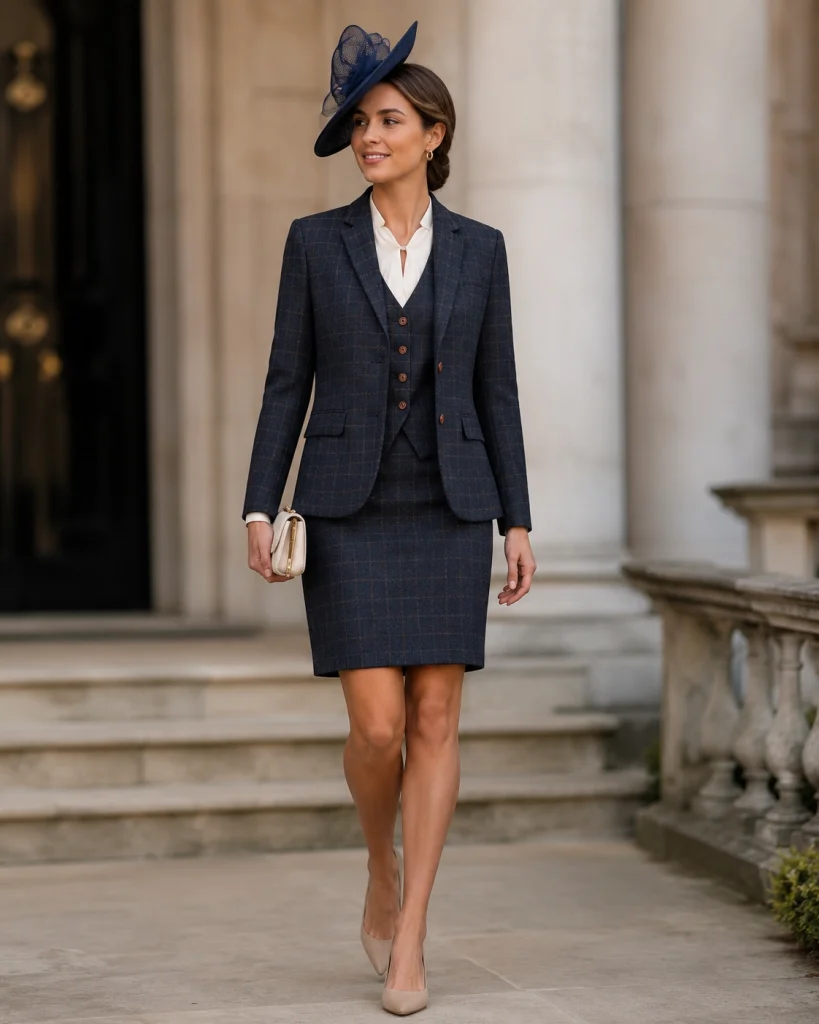
A women’s wedding suit can be bridal, formal, understated or deliberately fashion-led. The important thing is to build it as tailoring first: proportion, fit and fabric determine whether the outfit feels considered.
Write a short outfit brief before shopping
Bring four decisions to the first appointment: your role in the wedding, the invitation’s dress code, the venue and conditions, and the total outfit budget. This helps separate the tailoring you need from extras you simply like.
- For the bride: decide whether this is the ceremony outfit, an evening change or an outfit you want to wear again. Try any veil, headpiece or bouquet arrangement with the jacket rather than choosing each separately.
- For the wedding party: agree which elements must coordinate. Shared cloth or accessories can work without everyone wearing the same trouser or skirt shape.
- For a guest or parent: clarify ambiguous invitation wording with the couple before ordering. Our UK wedding dress-code guide is a starting point, not a substitute for their wishes.
Start with the role of the suit
A bride’s suit, a mother-of-the-bride outfit and a guest’s tailored look may all use similar pieces but carry different expectations. Decide whether the suit is the focal outfit or part of the wider wedding party.
Jacket shape changes the whole silhouette
Single-breasted and double-breasted jackets create different lines through the waist and front. Shoulder structure, jacket length and lapel proportion are at least as important as colour.
Trousers and skirts do not have to mirror the jacket size
Good tailoring works with the body rather than forcing every garment into one nominal size. Pay attention to waist, hip, rise and finished length independently.
Fabric sets the level of formality
Smooth dark cloths, pale bridal tailoring, textured tweeds and lighter seasonal fabrics each place the suit in a different context. Choose cloth with the venue and season in mind.
Compare the actual cloth and lining rather than judging warmth or formality from a colour name. The wedding suit fabric guide explains useful questions to take to a supplier.
Accessories should support the tailoring
Footwear, jewellery, shirt or blouse, tie and flowers can change the character of the same suit. Add detail selectively so the silhouette remains the strongest part of the look.
Check fit with the complete outfit
A simple suit that fits cleanly will usually look more intentional than a more decorative outfit with poor proportions. Check shoulder position, sleeve length, jacket balance and trouser or skirt length together.
What to check at the fitting
Wear the intended underwear, shirt or blouse and shoes. If something feels wrong, describe the movement or position that causes it rather than asking for an arbitrary smaller size.
- Jacket: stand naturally, then sit and reach forward. Check collar contact, sleeve length, pulling at the fastening and whether you can move comfortably.
- Trousers: walk and sit to check the waist, rise and seat. Assess the finished length over the actual shoes, not barefoot.
- Skirt: check comfort when seated, walking and using steps. Make sure the length and any opening work for the movements you expect on the day.
- Underlayers: check the neckline, sleeve position and visible edges with the jacket fastened and open. Take a daylight photograph if you want to compare options later.
- Alterations: ask the fitter which changes are feasible, their price and completion date. Do not assume every jacket proportion can be altered economically.
Questions to settle before ordering
Ask whether jacket and trousers or skirt can be ordered in different sizes, whether the selected pieces use the same cloth, and what is included in the quote. Confirm the supplier’s measuring process, delivery estimate, alteration arrangements and applicable exchange or return terms for the specific order.
Keep the agreed sizes, cloth reference and alteration instructions together. Book a final complete try-on after adjustments, with enough time for the supplier to address anything that is still uncomfortable. The wedding-party fitting plan can help coordinate several outfits.
Updated 2 October 2026.