Rings & Jewellery
Gold Wedding Rings Explained: 9ct, 14ct, 18ct and 22ct Compared
·The Wedding Ring Blog Editorial Team
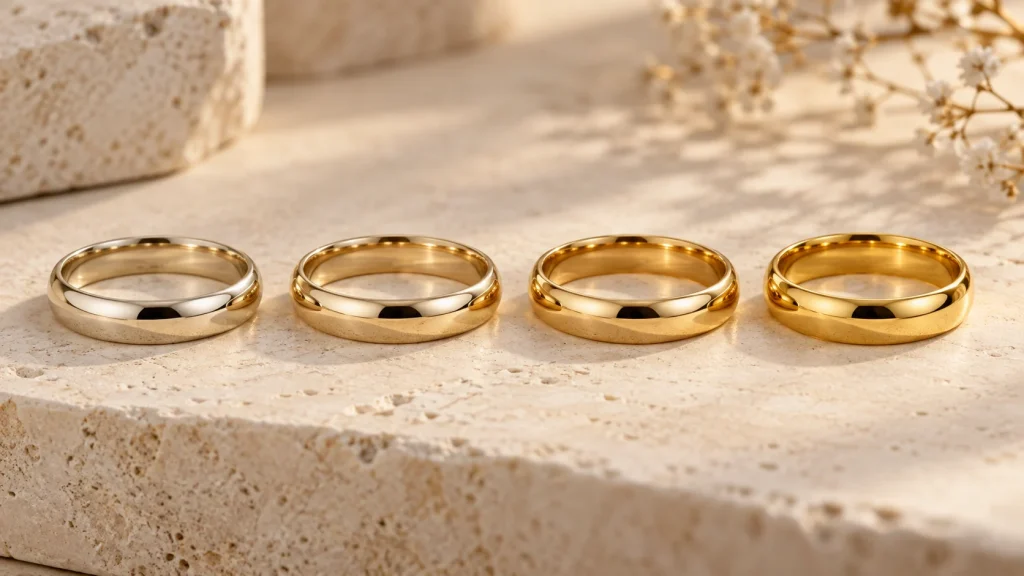
“Gold” is not one material. Wedding rings are made from gold alloyed with other metals, and the proportion of gold changes colour, working properties, price and how the finished ring behaves.
Updated 31 October 2026
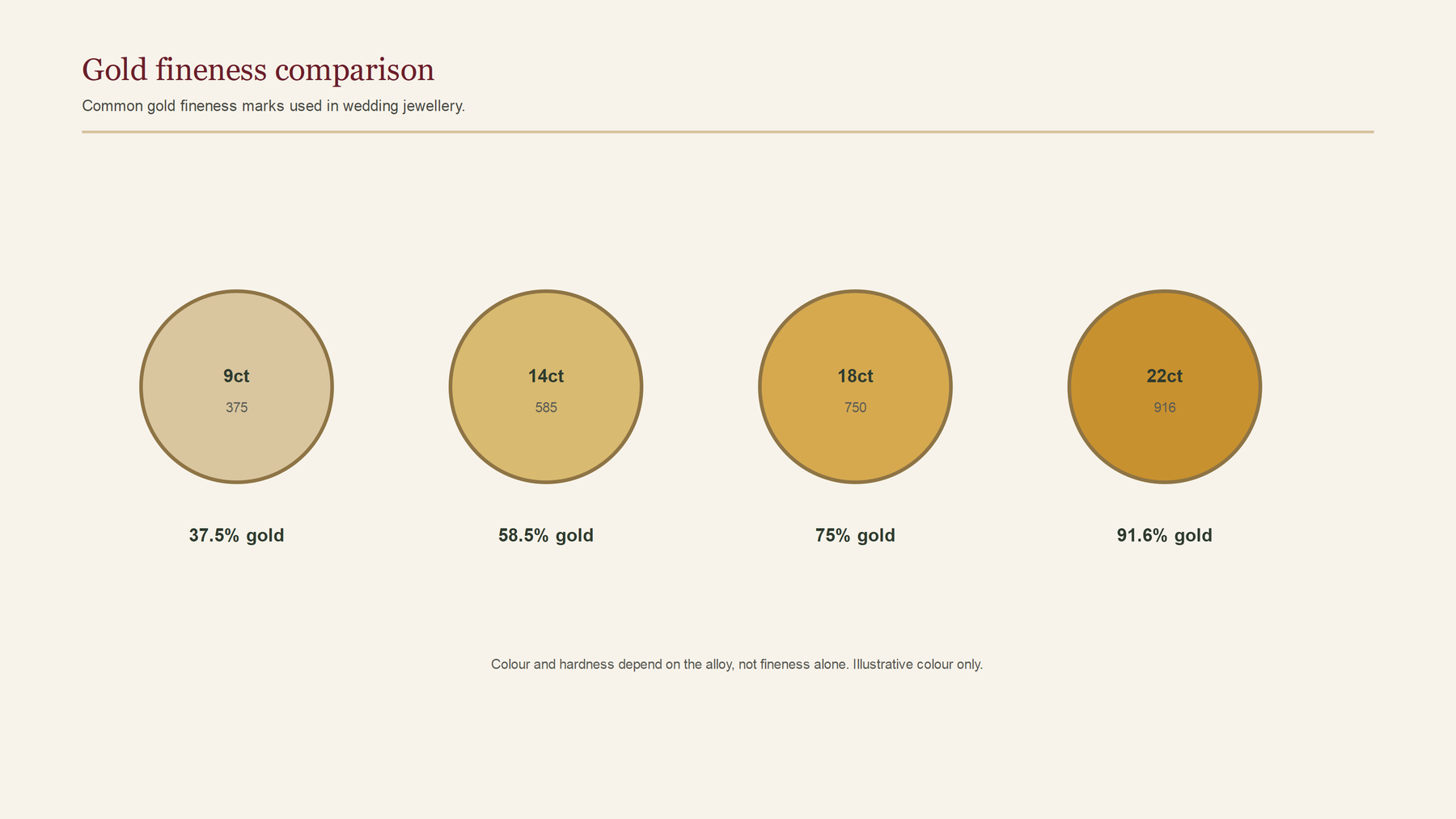
Gold carat and fineness
| Carat | Gold content | Fineness |
|---|---|---|
| 9ct | 37.5% | 375 |
| 14ct | 58.5% | 585 |
| 18ct | 75% | 750 |
| 22ct | 91.6% | 916 |
Fineness describes the gold proportion in the alloy. It does not tell you the band’s thickness, weight, construction or workmanship.
9ct or 18ct: compare the finished band
Higher carat means more gold. It does not mean the finished ring wins every engineering comparison. Alloy composition, ring thickness, profile and manufacture all matter. A well-made 9ct or 14ct ring can be an excellent everyday wedding band; an 18ct or 22ct ring can be the better choice if richer gold content and colour matter more to you.
9ct gold
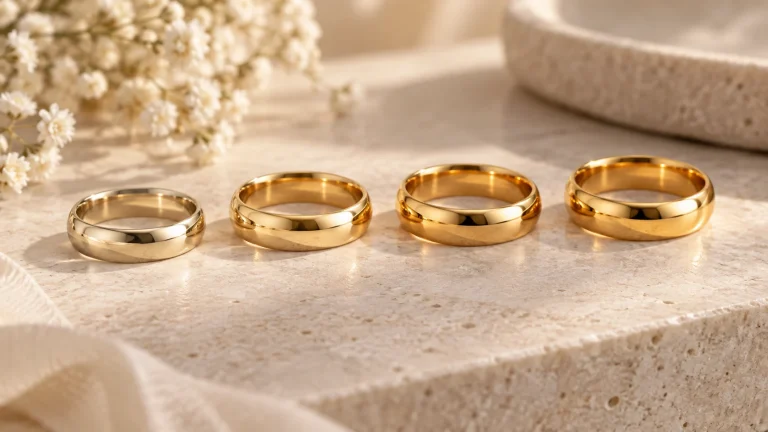
9ct gold contains 37.5% gold. It is widely available in the UK and can be a practical choice for buyers who want a precious-metal ring at a lower price than higher-carat options. The exact hardness and colour depend on the alloy rather than the carat number alone.
14ct gold
14ct gold contains 58.5% gold. It is particularly common in North American jewellery and can be a useful middle ground between 9ct and 18ct. UK buyers should still expect proper hallmarking when the item exceeds the exemption weight.
18ct gold
18ct gold contains 75% gold and is common in engagement and wedding jewellery. It gives a strong precious-metal character while still using alloying metals to achieve different colours and working properties.
22ct gold
22ct gold contains 91.6% gold. Its rich yellow colour is distinctive, but the high gold content makes it softer than common lower-carat alloys. A substantial plain band can still work well; delicate or heavily stone-set constructions need appropriate design.
Yellow, white and rose gold
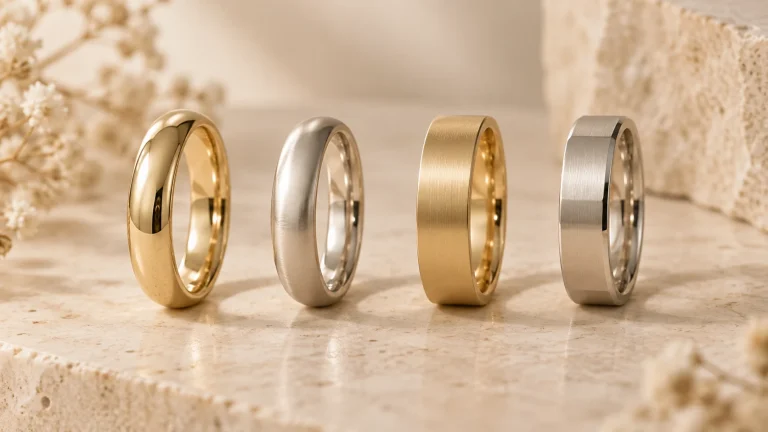
Carat describes gold content, not colour. The alloy determines whether the ring appears yellow, rose or white. White gold may be rhodium plated for a bright white surface. Rose gold typically uses copper-rich alloying. Two 18ct yellow-gold rings from different makers can also differ slightly in tone.
Can you mix gold carats in a ring stack?
Yes, but the colours and hardness can differ. If the rings make firm contact, inspect the contact points periodically. A stack should be evaluated as a physical system, not just a colour palette.
UK hallmarking
Gold articles sold in the UK above the 1 gram exemption weight must be hallmarked. Read the UK Hallmark Guide for the sponsor, fineness and Assay Office marks.
Which gold should you choose?
- Choose the colour you actually like in normal daylight.
- Try the intended width because a broad band makes the gold colour more visually dominant.
- Ask about alloy composition if you have metal sensitivity.
- Ask whether white gold is rhodium plated.
- Check future resizing and refinishing.
- Compare the colour beside an engagement ring if the pieces will be stacked.
For a broader comparison, see Wedding Ring Metals Explained.
A fair 9ct-versus-18ct comparison
Ask for two quotes in the same finger size, width, depth and profile. Record each ring’s stated weight and whether it is hollow, filled or a solid-section band. Changing the construction as well as the carat makes the price comparison harder to interpret.
- Appearance: compare the actual alloy colour beside the jewellery you will wear with it.
- Finished price: include engraving, delivery, initial sizing and any plating work.
- Long-term fit: ask who can resize and refinish the exact design.
Use the printable ring comparison record and our finished-quote example. If lower weight or a non-precious metal appeals, compare titanium, tungsten and steel before buying on price alone.
Sources and next steps
GOV.UK hallmarking guidance explains recognised marks and exemption weights. GIA’s ring-metal guide discusses alloy and maintenance considerations.
For a bright-white finish, compare platinum with white gold; for upkeep, use the care guide.