Rings & Jewellery
Wedding Ring Width Guide: 2mm, 4mm, 6mm or 8mm?
·The Wedding Ring Blog Editorial Team
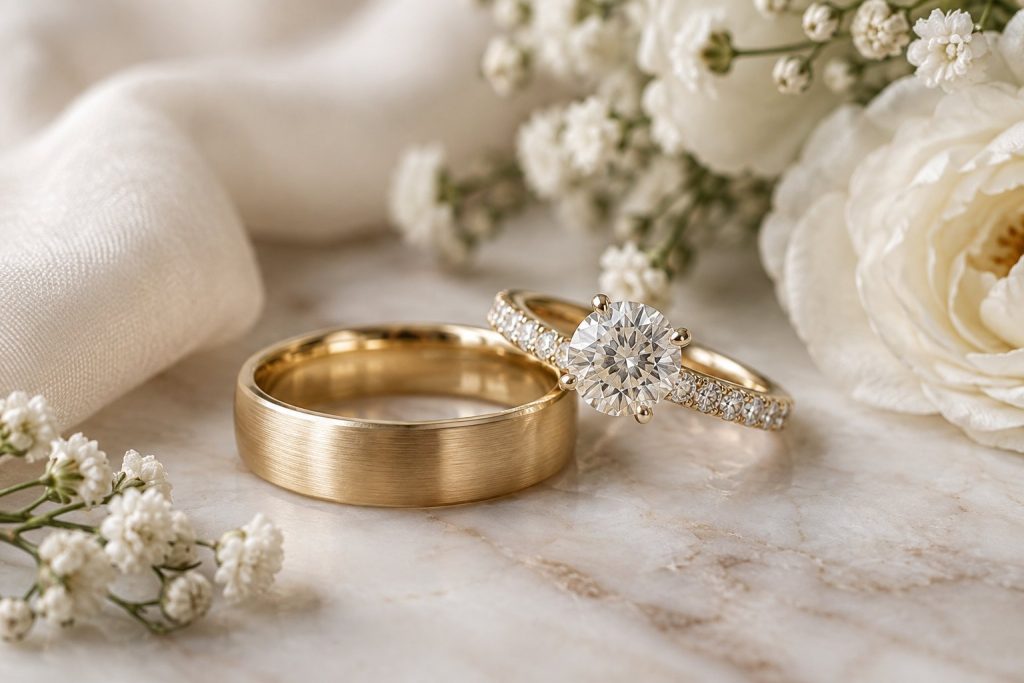
Ring width is one of the most visible choices in a plain wedding band, yet it is often treated as an afterthought. A difference of only two millimetres can change how substantial the ring looks, how much finger coverage it takes up and how it feels when you bend your hand.
| Width | Typical visual effect | Things to check |
|---|---|---|
| 2–3mm | Fine, discreet, easy to stack | Can look delicate on a large hand; less visual impact |
| 4mm | Balanced and versatile | Good reference width when trying rings |
| 5–6mm | More substantial | Check knuckle clearance and comfort |
| 7–8mm+ | Bold, architectural | May need a slightly different size |
Visual guide
What common wedding-ring widths look like
Shown proportionally as a comparison aid rather than a sizing template.
2 mmfine
4 mmbalanced
6 mmsubstantial
8 mmbold
Width can change perceived ring size
Broader rings contact more of the finger. That can make the same nominal size feel tighter than a narrow band.
Start with your finger length, not gender labels
Your hand does not care which cabinet the ring came from. Choose proportion and comfort.
Think about neighbouring rings
If your wedding band will sit beside an engagement ring or eternity ring, measure the whole stack.
How to test a width properly
- Wear the sample for several minutes.
- Make a fist and grip your phone.
- Check whether the band touches neighbouring fingers uncomfortably.
- If stacking, try it with the other ring.