Rings & Jewellery
What Does a Wedding Ring Cost? The Factors That Actually Change the Price
·The Wedding Ring Blog Editorial Team
There is no useful single answer to what a wedding ring “should” cost. Two plain-looking bands can differ substantially because metal, weight, dimensions, construction and finishing are different beneath the surface.
Start with material and metal content
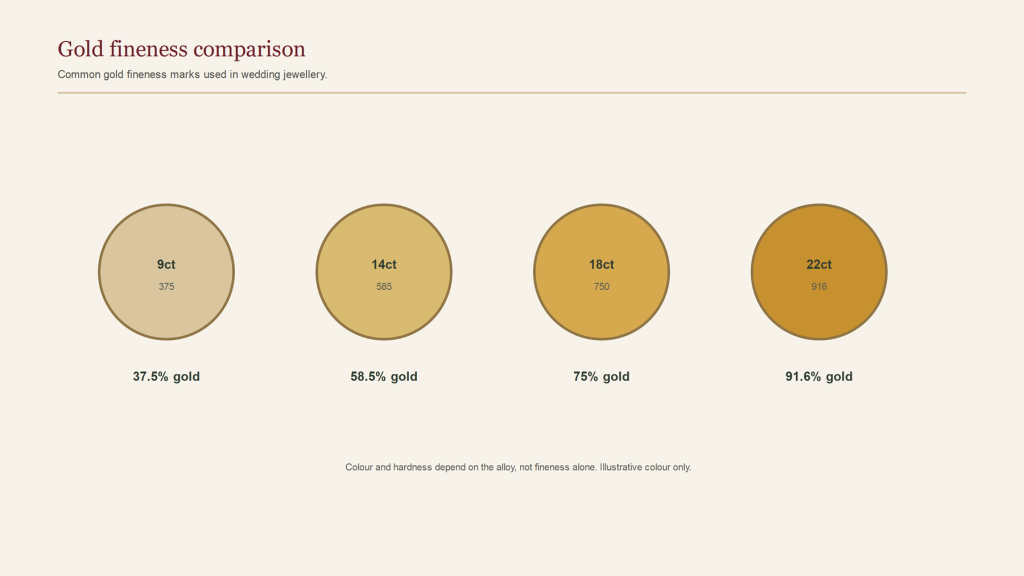
Precious-metal content is one of the most obvious cost drivers, but it is not the only one. A wider or heavier ring uses more material; different alloys also have different manufacturing and finishing requirements.
Width and depth both matter
Width is visible, while depth is easy to miss in photographs. Two rings of the same width can use very different amounts of material if one is substantially heavier or deeper.
Plain does not necessarily mean cheap
A simple band still needs accurate manufacture, finishing and quality control. The absence of stones or decorative detail reduces complexity, but it does not make material and workmanship irrelevant.
Stone setting changes the equation
Diamonds or other stones add both material and labour. Ask what is being supplied, how the stones are set and whether the design affects future resizing.
Finish and surface detail can add labour
Hammered textures, engraving, mixed finishes and detailed edges can require additional work even when the underlying form is simple.
Brand, retail model and service also affect price
Part of the price may reflect design, retail environment, customisation, sizing support, aftercare or brand positioning. Decide which of those things you actually value rather than treating every price difference as a material difference.
Compare like with like
When comparing rings, record metal, fineness, width, approximate weight or depth where available, profile, finish, stones, sizing policy and aftercare. A lower headline price is only meaningful when the specification is genuinely comparable.